13. in corn plants, normal height, n, is dominant to short height, n. complete these four punnett squares…
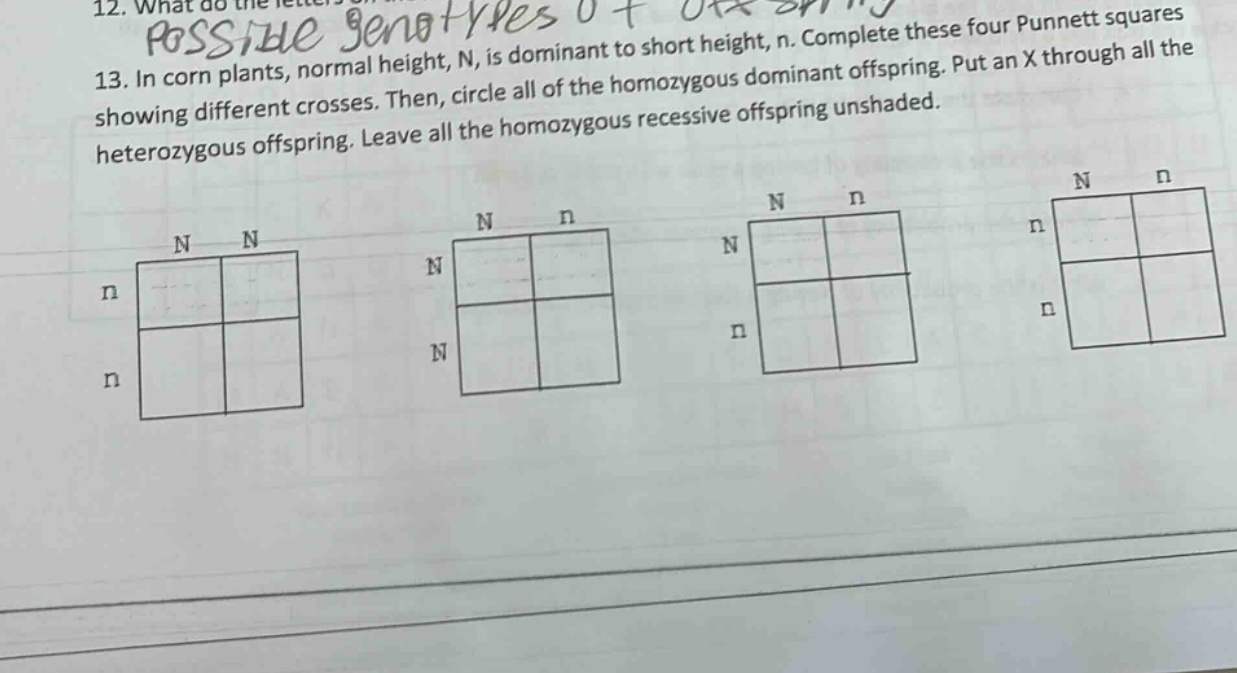
13. in corn plants, normal height, n, is dominant to short height, n. complete these four punnett squares showing different crosses. then, circle all of the homozygous dominant offspring. put an x through all the heterozygous offspring. leave all the homozygous recessive offspring unshaded.
Answer
Explanation:
Step1: Recall Punnett - square rules
A Punnett square is used to predict the genotypes of offspring from a cross. When N (normal height, dominant) and n (short height, recessive) are crossed, we consider the possible gametes from each parent.
Step2: Analyze the first cross (Nn x Nn)
The first cross has parents with genotypes Nn. The possible gametes from each parent are N and n. The genotypes of the offspring are:
| N | n | |
|---|---|---|
| N | NN | Nn |
| n | Nn | nn |
| NN is homozygous dominant, Nn is heterozygous, and nn is homozygous recessive. |
Step3: Analyze the second cross (NN x Nn)
The possible gametes from NN are N, and from Nn are N and n. The genotypes of the offspring are:
| N | n | |
|---|---|---|
| N | NN | Nn |
| N | NN | Nn |
| NN is homozygous dominant and Nn is heterozygous. |
Step4: Analyze the third cross (Nn x nn)
The possible gametes from Nn are N and n, and from nn are n. The genotypes of the offspring are:
| N | n | |
|---|---|---|
| n | Nn | nn |
| n | Nn | nn |
| Nn is heterozygous and nn is homozygous recessive. |
Step5: Analyze the fourth cross (nn x nn)
The possible gametes from both parents are n. The genotypes of the offspring are all nn (homozygous recessive).
For the first cross (Nn x Nn):
- Homozygous dominant (NN): 1 out of 4, mark with X.
- Heterozygous (Nn): 2 out of 4, circle.
- Homozygous recessive (nn): 1 out of 4, leave un - shaded.
For the second cross (NN x Nn):
- Homozygous dominant (NN): 2 out of 4, mark with X.
- Heterozygous (Nn): 2 out of 4, circle.
For the third cross (Nn x nn):
- Heterozygous (Nn): 2 out of 4, circle.
- Homozygous recessive (nn): 2 out of 4, leave un - shaded.
For the fourth cross (nn x nn):
- Homozygous recessive (nn): 4 out of 4, leave un - shaded.
Since we are not actually filling in the squares in a digital sense here, the genotypes of the offspring for each cross are as follows:
- First cross (Nn x Nn): Genotypes are NN, Nn, Nn, nn.
- Second cross (NN x Nn): Genotypes are NN, Nn, NN, Nn.
- Third cross (Nn x nn): Genotypes are Nn, nn, Nn, nn.
- Fourth cross (nn x nn): Genotypes are nn, nn, nn, nn.
Answer:
First cross genotypes: NN, Nn, Nn, nn; Second cross genotypes: NN, Nn, NN, Nn; Third cross genotypes: Nn, nn, Nn, nn; Fourth cross genotypes: nn, nn, nn, nn. Mark NN with X, circle Nn, leave nn un - shaded for each cross respectively.