18. which of the following is an example of cultural diversity in plant use?\n a. different cultures have…
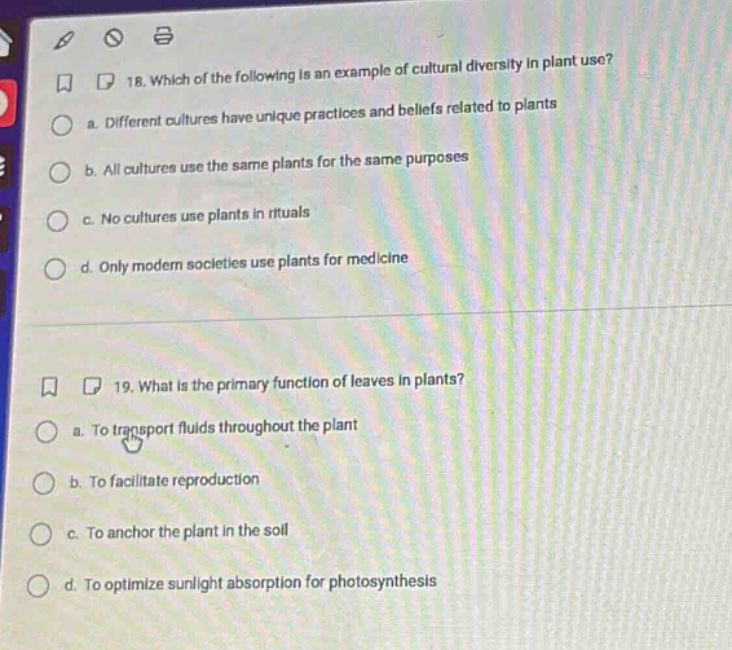
18. which of the following is an example of cultural diversity in plant use?\n a. different cultures have unique practices and beliefs related to plants\n b. all cultures use the same plants for the same purposes\n c. no cultures use plants in rituals\n d. only modern societies use plants for medicine\n\n19. what is the primary function of leaves in plants?\n a. to transport fluids throughout the plant\n b. to facilitate reproduction\n c. to anchor the plant in the soil\n d. to optimize sunlight absorption for photosynthesis
Answer
18.
Brief Explanations:
Cultural diversity implies uniqueness in practices and beliefs across cultures. Option a reflects this in plant - use context. Options b, c, and d are incorrect as they either deny diversity or make false generalizations.
Answer:
a. Different cultures have unique practices and beliefs related to plants
19.
Brief Explanations:
The main function of leaves is to capture sunlight for the process of photosynthesis. Vascular tissues transport fluids, flowers facilitate reproduction, and roots anchor the plant in the soil.
Answer:
d. To optimize sunlight absorption for photosynthesis