active transport both passive transport\nrequires energy\nendocytosis\nosmosis\nutilizes the semi-permeable…
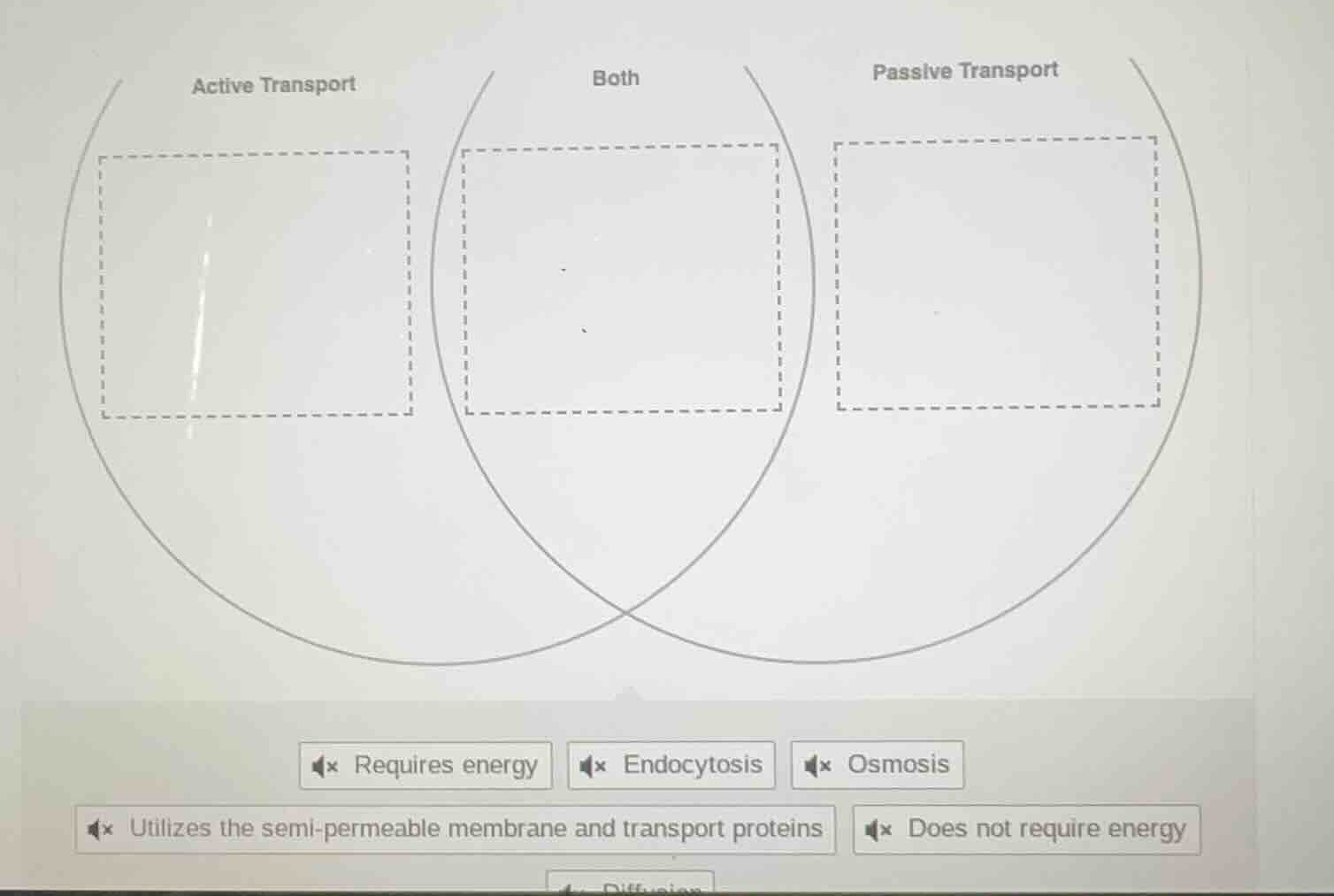
active transport both passive transport\nrequires energy\nendocytosis\nosmosis\nutilizes the semi-permeable membrane and transport proteins\ndoes not require energy\ndiffusion
Answer
Brief Explanations:
The Venn diagram compares active and passive transport mechanisms in biological cells. Active transport requires cellular energy (ATP) to move substances against a concentration gradient, including processes like endocytosis. Passive transport, such as osmosis and diffusion, occurs spontaneously without energy input, moving substances down a concentration gradient. Both processes are essential for maintaining homeostasis and utilize the semi-permeable cell membrane and specific transport proteins (like pumps for active or channels/carriers for facilitated passive transport) to regulate the movement of molecules.
Answer:
Active Transport: Requires energy, Endocytosis Both: Utilizes the semi-permeable membrane and transport proteins Passive Transport: Osmosis, Does not require energy, Diffusion