adult somatic cell nuclear transfer, also known as cloning, may potentially be a method to recover…
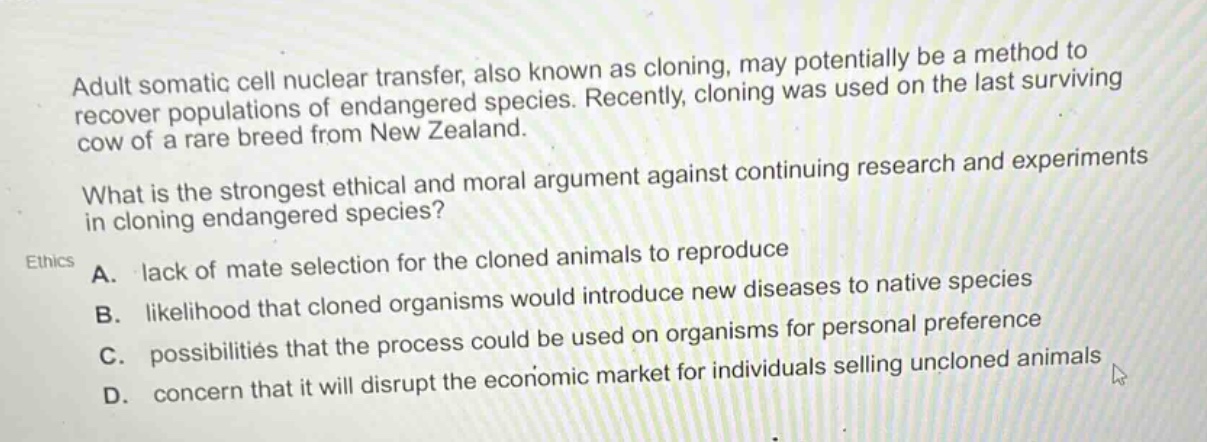
adult somatic cell nuclear transfer, also known as cloning, may potentially be a method to recover populations of endangered species. recently, cloning was used on the last surviving cow of a rare breed from new zealand. what is the strongest ethical and moral argument against continuing research and experiments in cloning endangered species? ethics a. lack of mate selection for the cloned animals to reproduce b. likelihood that cloned organisms would introduce new diseases to native species c. possibilities that the process could be used on organisms for personal preference d. concern that it will disrupt the economic market for individuals selling uncloned animals
Answer
Brief Explanations:
The main ethical concern with cloning is the potential misuse for personal preference. Lack of mate - selection is a biological concern, introducing new diseases is a health - related concern, and market disruption is an economic concern. The ethical and moral issue is the non - natural and potentially self - serving use of the cloning process.
Answer:
C. possibilities that the process could be used on organisms for personal preference