how does an aed affect the rhythm of the heart?\nit massages the chest to stimulate the return of the hearts…
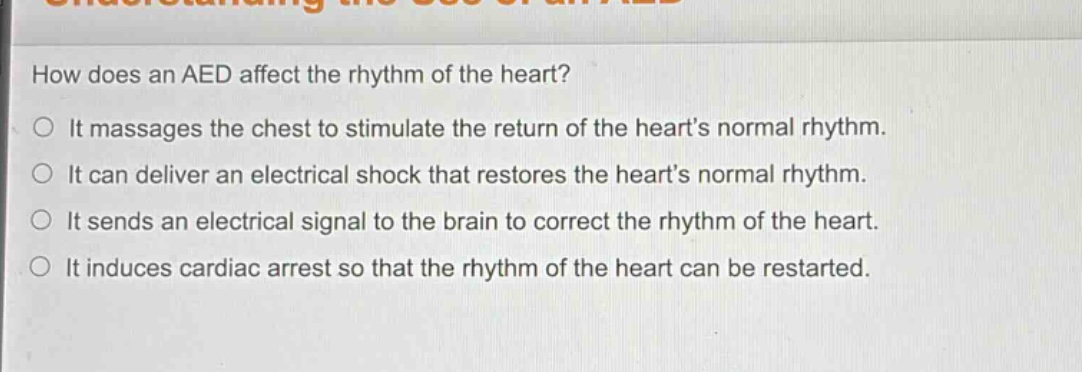
how does an aed affect the rhythm of the heart?\nit massages the chest to stimulate the return of the hearts normal rhythm.\nit can deliver an electrical shock that restores the hearts normal rhythm.\nit sends an electrical signal to the brain to correct the rhythm of the heart.\nit induces cardiac arrest so that the rhythm of the heart can be restarted.
Answer
Brief Explanations:
An AED (Automated External Defibrillator) is a medical device. Chest - massage is part of CPR (Cardiopulmonary Resuscitation), not the function of an AED. An AED does not send signals to the brain to correct the heart rhythm. And it definitely does not induce cardiac arrest. The main function of an AED is to deliver an electrical shock. This shock can reset the heart's electrical activity and restore its normal rhythm when the heart is in a life - threatening arrhythmia (such as ventricular fibrillation).
Answer:
It can deliver an electrical shock that restores the heart’s normal rhythm.