4. which answer choice shows a chemical change? (a) water boiling b. water freezing c. a bike rusting d. a…
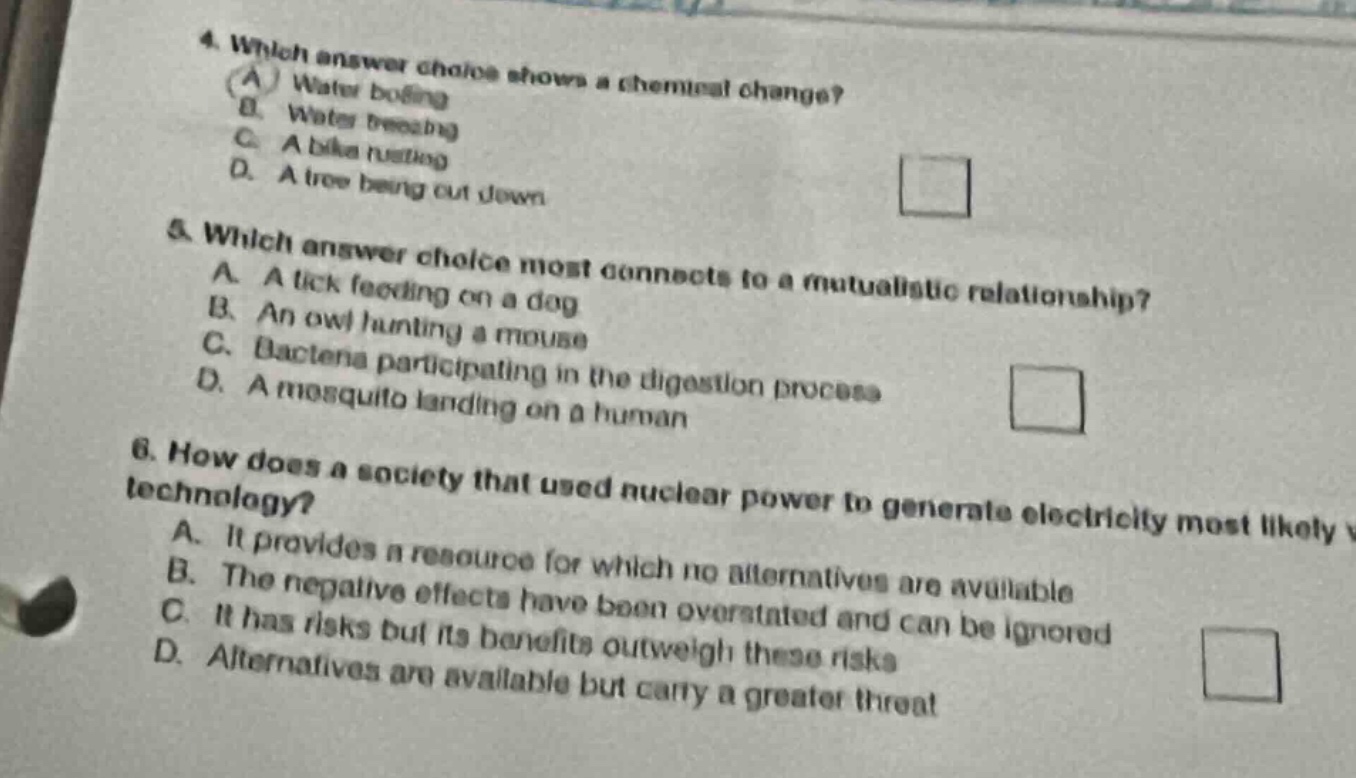
4. which answer choice shows a chemical change? (a) water boiling b. water freezing c. a bike rusting d. a tree being cut down 5. which answer choice most connects to a mutualistic relationship? a. a tick feeding on a dog b. an owl hunting a mouse c. bacteria participating in the digestion process d. a mosquito landing on a human 6. how does a society that used nuclear power to generate electricity most likely view nuclear - power technology? a. it provides a resource for which no alternatives are available b. the negative effects have been overstated and can be ignored c. it has risks but its benefits outweigh these risks d. alternatives are available but carry a greater threat
Answer
Brief Explanations:
Question 4:
A chemical change results in a new substance being formed. Water boiling is a physical change (liquid - gas phase change), water freezing is also a physical change (liquid - solid phase change), and cutting a tree is a physical change (change in shape). Rusting of a bike is a chemical change as iron reacts with oxygen and moisture to form iron oxide (rust).
Question 5:
In a mutualistic relationship, both organisms benefit. A tick feeding on a dog is parasitism (tick benefits, dog is harmed), an owl hunting a mouse is predation, a mosquito landing on a human can be considered parasitism (mosquito benefits potentially harming human). Bacteria participating in the digestion process help the host digest food and in turn get a habitat and nutrients, which is a mutualistic relationship.
Question 6:
Nuclear power has risks such as radioactive waste disposal and potential accidents. However, alternatives like fossil - fuels have their own threats such as air pollution and greenhouse gas emissions. Nuclear power has benefits like low - carbon electricity generation. So, alternatives are available but carry a greater threat in some aspects.
Answer:
- C. A bike rusting
- D. Bacteria participating in the digestion process
- D. Alternatives are available but carry a greater threat