based on the current understanding of this operon, which hypothesis would be useful for james to test?\no…
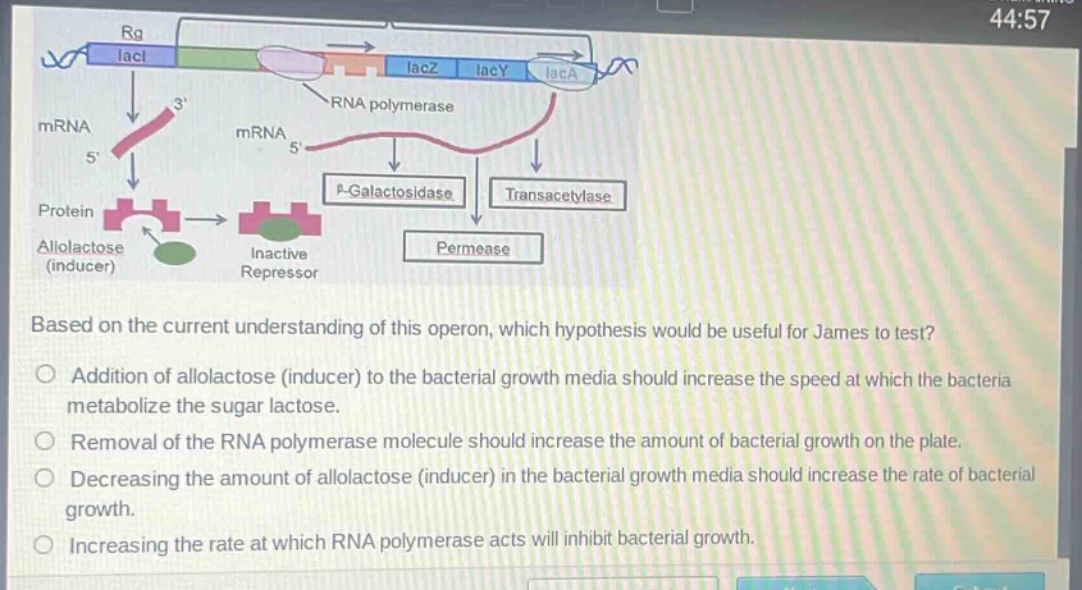
based on the current understanding of this operon, which hypothesis would be useful for james to test?\no addition of allolactose (inducer) to the bacterial growth media should increase the speed at which the bacteria metabolize the sugar lactose.\no removal of the rna polymerase molecule should increase the amount of bacterial growth on the plate.\no decreasing the amount of allolactose (inducer) in the bacterial growth media should increase the rate of bacterial growth.\no increasing the rate at which rna polymerase acts will inhibit bacterial growth.
Answer
Brief Explanations:
The lac - operon is an inducible operon. Allolactose acts as an inducer. When allolactose is present, it binds to the repressor, inactivating it. This allows RNA polymerase to transcribe the genes (lacZ, lacY, lacA) involved in lactose metabolism. So, adding allolactose should increase the metabolism of lactose. RNA polymerase is essential for transcription and its removal would halt gene expression and likely decrease bacterial growth. Decreasing the inducer would keep the repressor active and reduce lactose - related gene expression, not increase bacterial growth. Increasing RNA polymerase activity would likely enhance gene expression related to lactose metabolism and not inhibit bacterial growth.
Answer:
Addition of allolactose (inducer) to the bacterial growth media should increase the speed at which the bacteria metabolize the sugar lactose.