bedbugs are small insects that live in and around the bedding of humans and feed on humans at night. their…
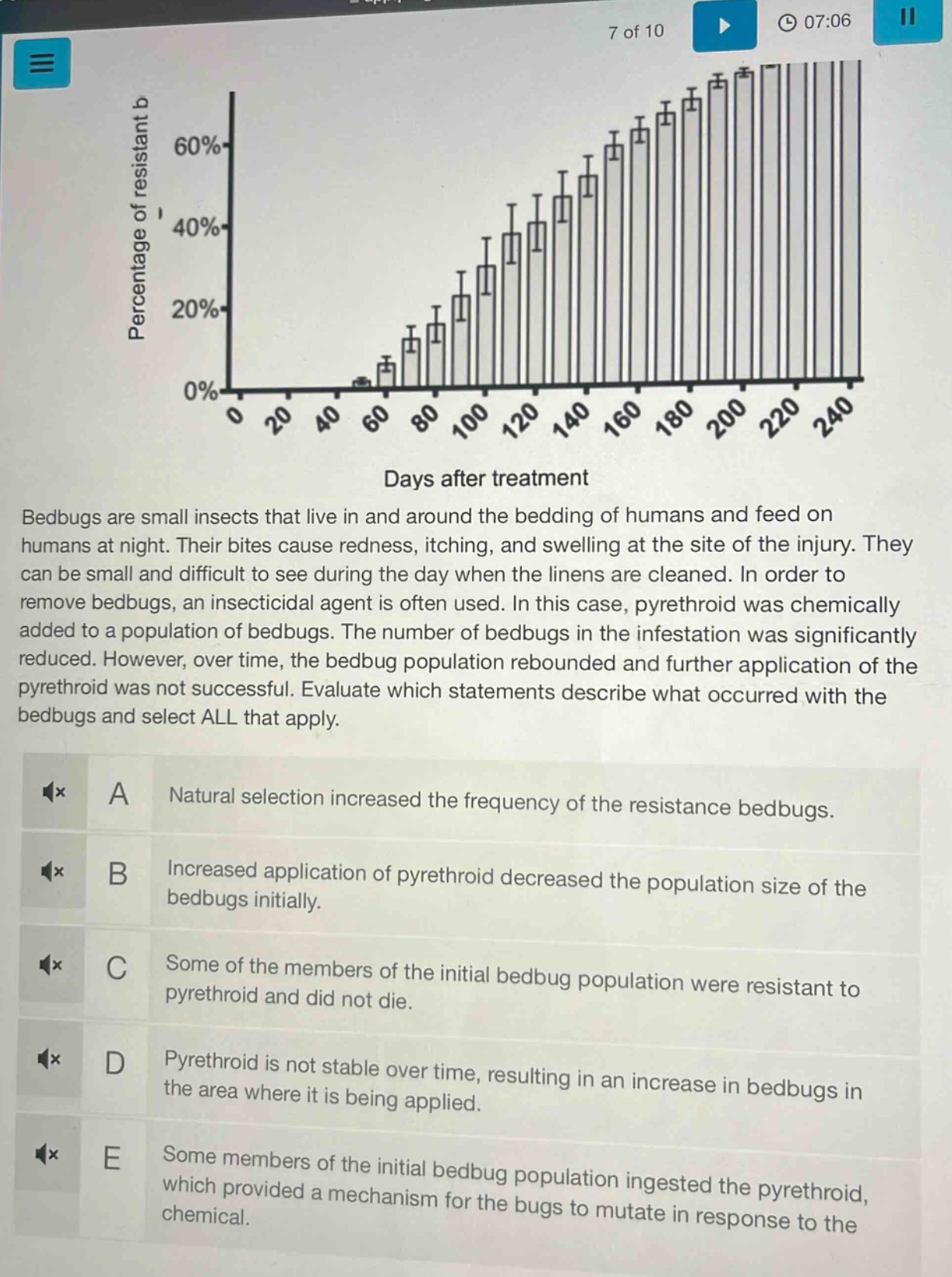
bedbugs are small insects that live in and around the bedding of humans and feed on humans at night. their bites cause redness, itching, and swelling at the site of the injury. they can be small and difficult to see during the day when the linens are cleaned. in order to remove bedbugs, an insecticidal agent is often used. in this case, pyrethroid was chemically added to a population of bedbugs. the number of bedbugs in the infestation was significantly reduced. however, over time, the bedbug population rebounded and further application of the pyrethroid was not successful. evaluate which statements describe what occurred with the bedbugs and select all that apply.\na natural selection increased the frequency of the resistance bedbugs.\nb increased application of pyrethroid decreased the population size of the bedbugs initially.\nc some of the members of the initial bedbug population were resistant to pyrethroid and did not die.\nd pyrethroid is not stable over time, resulting in an increase in bedbugs in the area where it is being applied.\ne some members of the initial bedbug population ingested the pyrethroid, which provided a mechanism for the bugs to mutate in response to the chemical.
Answer
Brief Explanations:
- A: Natural selection favored resistant bedbugs, increasing their frequency as non - resistant ones died off.
- B: The text states that the number of bedbugs in the infestation was significantly reduced initially upon pyrethroid application.
- C: For the population to rebound, some initial bedbugs must have been resistant and survived.
- D: There is no evidence in the text suggesting pyrethroid instability is the cause of bedbug increase.
- E: There is no indication in the text that ingestion of pyrethroid caused mutations.
Answer:
A. Natural selection increased the frequency of the resistance bedbugs. B. Increased application of pyrethroid decreased the population size of the bedbugs initially. C. Some of the members of the initial bedbug population were resistant to pyrethroid and did not die.