which best explains why a decrease in the types of insects in an ecosystem reduces the sustainability of the…
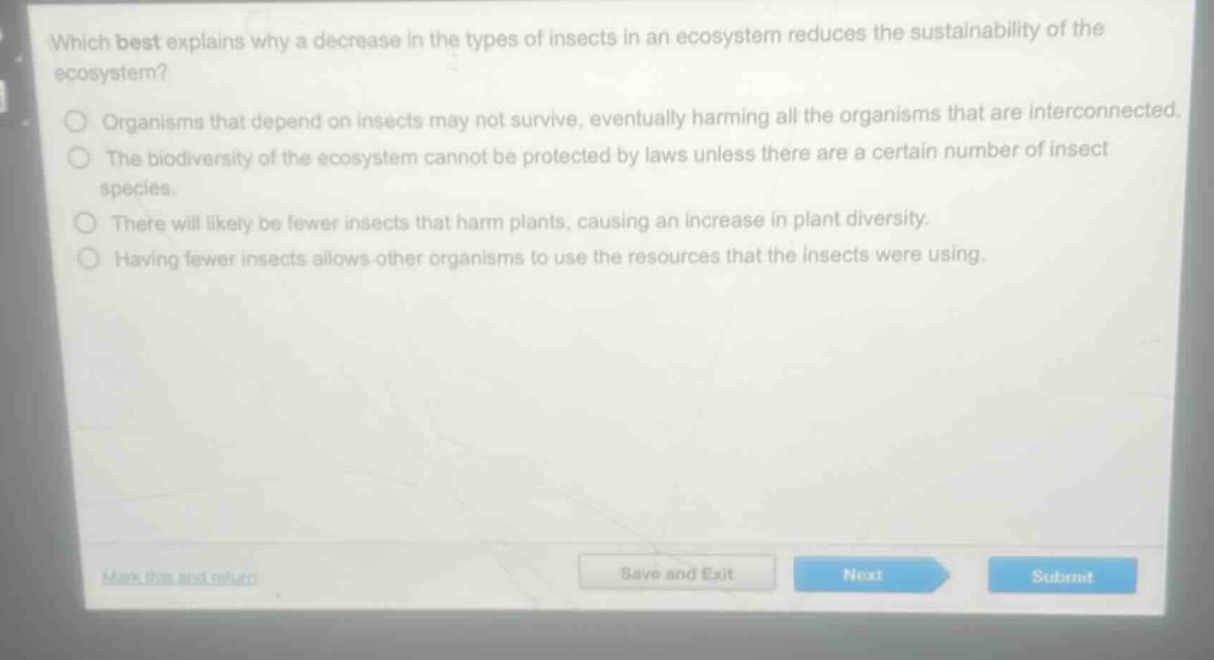
which best explains why a decrease in the types of insects in an ecosystem reduces the sustainability of the ecosystem?\norganisms that depend on insects may not survive, eventually harming all the organisms that are interconnected.\nthe biodiversity of the ecosystem cannot be protected by laws unless there are a certain number of insect species.\nthere will likely be fewer insects that harm plants, causing an increase in plant diversity.\nhaving fewer insects allows other organisms to use the resources that the insects were using.
Answer
Answer:
Organisms that depend on insects may not survive, eventually harming all the organisms that are interconnected.
Brief Explanations:
In an ecosystem, organisms are interconnected. If insects (a food source or having other ecological roles) decrease in types, organisms relying on them (e.g., insect - eating birds) may die. This disrupts the food web and other ecological interactions, reducing ecosystem sustainability. Laws protecting biodiversity (second option) are not the main reason for reduced sustainability here. Fewer harmful insects (third option) might seem positive but doesn't explain reduced sustainability. Other organisms using insect resources (fourth option) doesn't address the interconnectedness and potential harm to the overall ecosystem as comprehensively as the first option.