which best explains the zygote?\nit has a diploid number of chromosomes.\nit has a haploid number of…
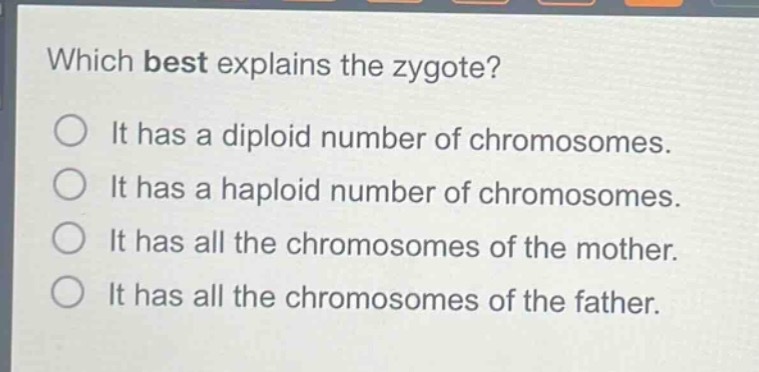
which best explains the zygote?\nit has a diploid number of chromosomes.\nit has a haploid number of chromosomes.\nit has all the chromosomes of the mother.\nit has all the chromosomes of the father.
Answer
Brief Explanations:
A zygote is formed by the fusion of a sperm and an egg. A sperm and an egg are haploid cells, each with half the number of chromosomes of a somatic cell. When they fuse, the resulting zygote has the diploid number of chromosomes, which is the characteristic number of chromosomes for the species' somatic cells.
Answer:
It has a diploid number of chromosomes.