1.which of these is the best indication of the relative age of a rock layer? a the thickness of the layer b…
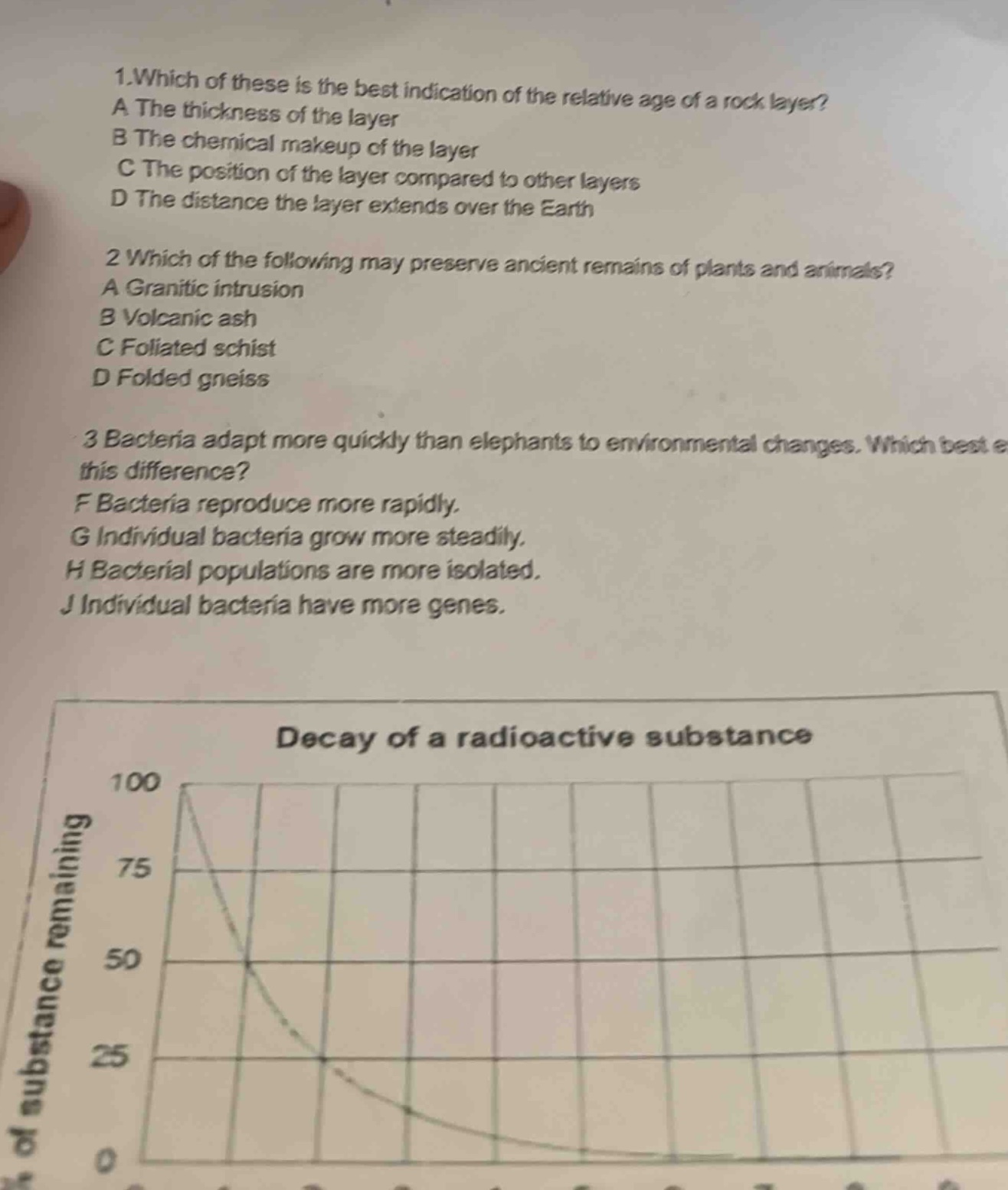
1.which of these is the best indication of the relative age of a rock layer? a the thickness of the layer b the chemical makeup of the layer c the position of the layer compared to other layers d the distance the layer extends over the earth 2 which of the following may preserve ancient remains of plants and animals? a granitic intrusion b volcanic ash c foliated schist d folded gneiss 3 bacteria adapt more quickly than elephants to environmental changes. which best explains this difference? f bacteria reproduce more rapidly. g individual bacteria grow more steadily. h bacterial populations are more isolated. j individual bacteria have more genes. decay of a radioactive substance
Answer
Brief Explanations:
- In geology, the principle of superposition states that in undisturbed rock - layers, the older layers are at the bottom and the younger ones are on top. So the position of a layer compared to other layers is the best indicator of relative age.
- Volcanic ash can quickly bury plants and animals, preserving their remains as fossils. Other options like granitic intrusion, foliated schist, and folded gneiss are associated with high - temperature and high - pressure conditions that usually destroy organic remains.
- Bacteria reproduce asexually through binary fission and can do so very rapidly (in some cases every 20 minutes or so). This rapid reproduction rate allows them to adapt more quickly to environmental changes as new genetic variations can spread through the population faster.
Answer:
- C. The position of the layer compared to other layers
- B. Volcanic ash
- F. Bacteria reproduce more rapidly.