a biologist is studying two organisms, x and y. she knows that at least one of them is an animal. organism x…
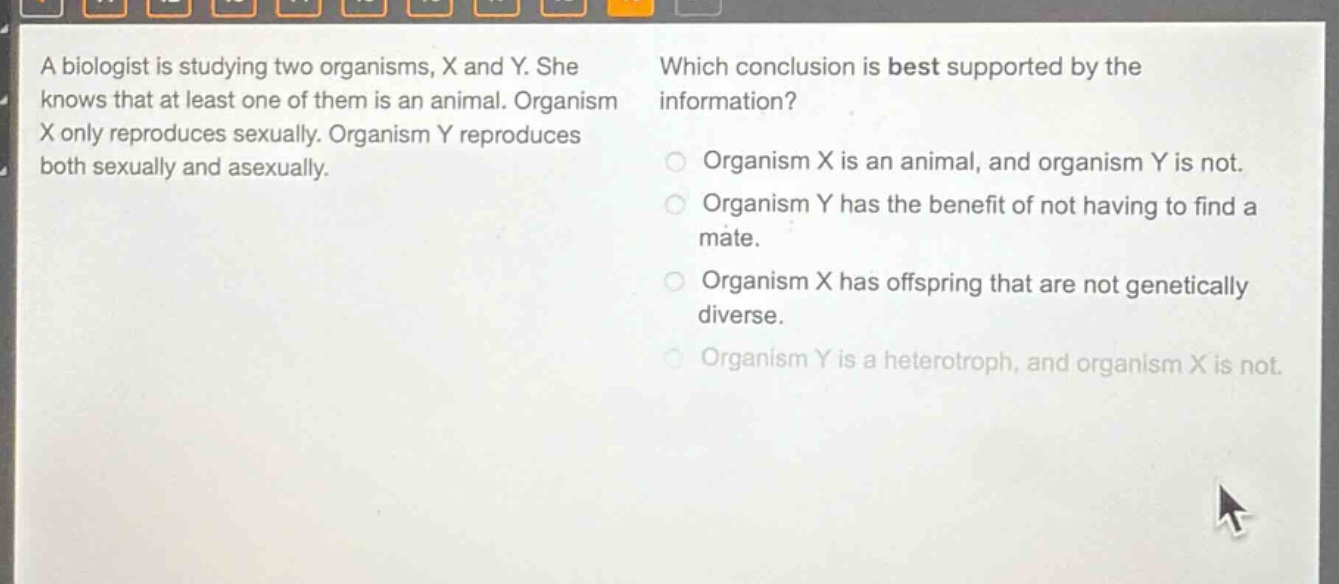
a biologist is studying two organisms, x and y. she knows that at least one of them is an animal. organism x only reproduces sexually. organism y reproduces both sexually and asexually. which conclusion is best supported by the information? organism x is an animal, and organism y is not. organism y has the benefit of not having to find a mate. organism x has offspring that are not genetically diverse. organism y is a heterotroph, and organism x is not.
Answer
Answer:
Organism Y has the benefit of not having to find a mate.
Brief Explanations:
Organism Y can reproduce asexually, which means it doesn't need a mate for reproduction. Sexual - only reproduction in organism X requires finding a mate. There's not enough info to determine if X or Y is an animal, if X has non - diverse offspring, or if Y is a heterotroph.