a botanist wants to determine if a fertilizer is effective in the growth of plants. he randomly selects 100…
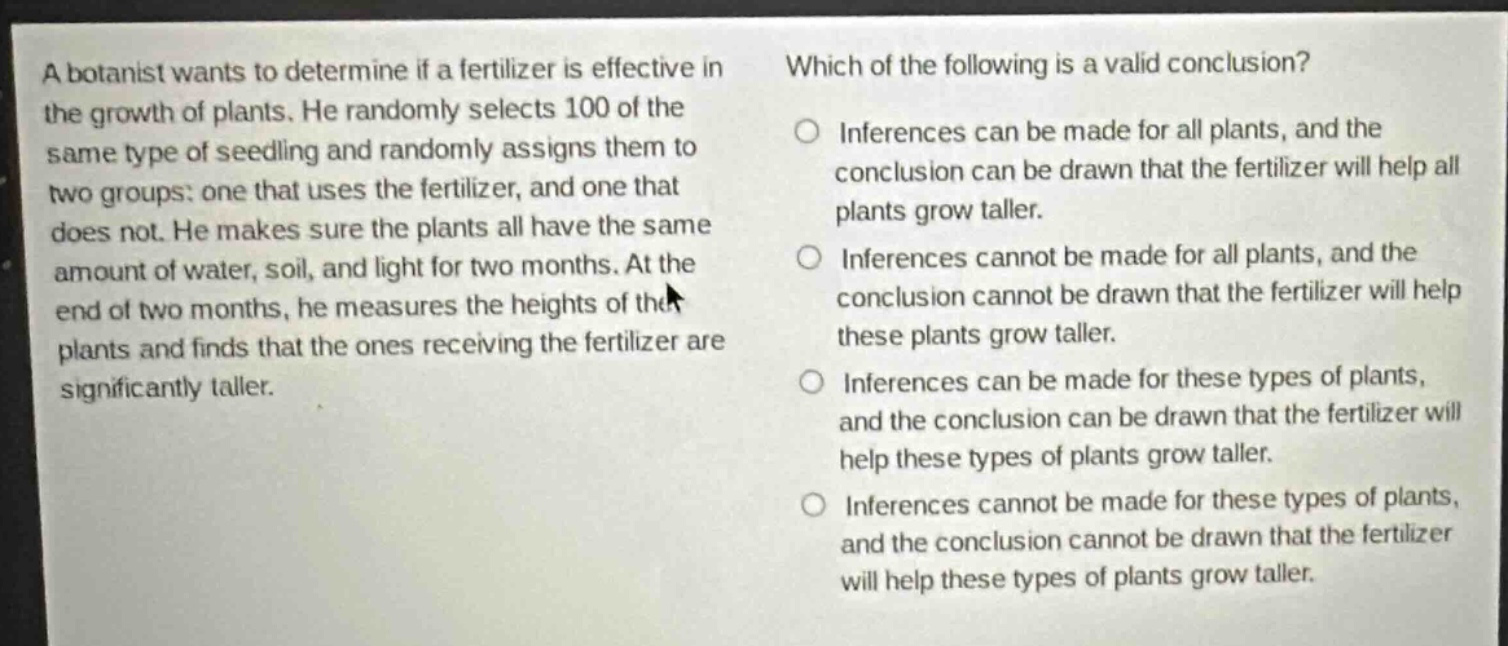
a botanist wants to determine if a fertilizer is effective in the growth of plants. he randomly selects 100 of the same type of seedling and randomly assigns them to two groups: one that uses the fertilizer, and one that does not. he makes sure the plants all have the same amount of water, soil, and light for two months. at the end of two months, he measures the heights of the plants and finds that the ones receiving the fertilizer are significantly taller. which of the following is a valid conclusion? inferences can be made for all plants, and the conclusion can be drawn that the fertilizer will help all plants grow taller. inferences cannot be made for all plants, and the conclusion cannot be drawn that the fertilizer will help these plants grow taller. inferences can be made for these types of plants, and the conclusion can be drawn that the fertilizer will help these types of plants grow taller. inferences cannot be made for these types of plants, and the conclusion cannot be drawn that the fertilizer will help these types of plants grow taller.
Answer
Answer:
Inferences can be made for these types of plants, and the conclusion can be drawn that the fertilizer will help these types of plants grow taller.
Explanation:
Step1: Analyze sample scope
The botanist used one - type seedlings.
Step2: Determine inference range
Inferences are for the same type of plants used in the experiment.
Step3: Evaluate conclusion
Since fertilized plants were taller, it helps these types grow taller.