which cell structure serves the stated function in both eukaryotic and prokaryotic cells?\no nucleus: stores…
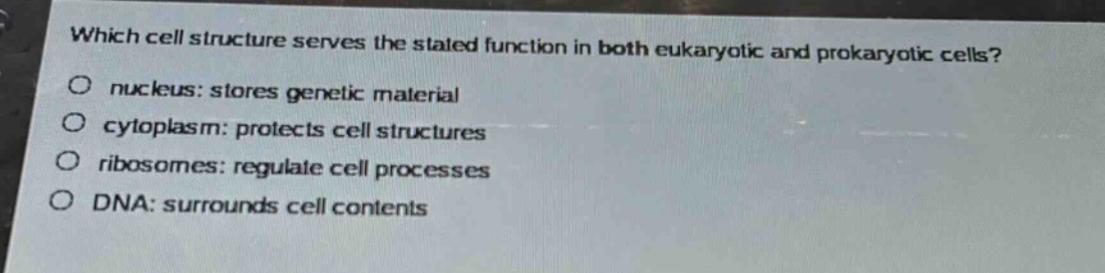
which cell structure serves the stated function in both eukaryotic and prokaryotic cells?\no nucleus: stores genetic material\no cytoplasm: protects cell structures\no ribosomes: regulate cell processes\no dna: surrounds cell contents
Answer
Answer:
None of the above options are correct. In both eukaryotic and prokaryotic cells, cytoplasm is present and it is a site for many cellular processes, not primarily for protecting cell - structures. Nucleus is only in eukaryotic cells. Ribosomes are for protein synthesis, not regulating cell processes. DNA is the genetic material, not for surrounding cell contents. But if we have to choose the "least wrong" one among the given options, cytoplasm is present in both cell types. So if we assume a mis - statement about its function, the answer would be cytoplasm: protects cell structures.
Brief Explanations:
Prokaryotes lack a nucleus. Ribosomes make proteins. DNA is genetic material. Cytoplasm is in both cell types, though its main function isn't protection but is a medium for cellular activities.