a certain population of birds can have one of three beak lengths: short, medium, or long. birds with short…
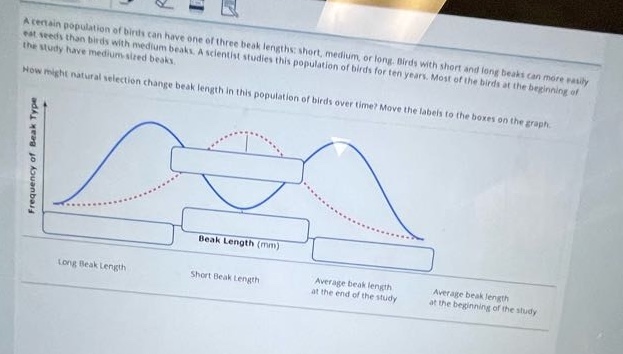
a certain population of birds can have one of three beak lengths: short, medium, or long. birds with short and long beaks can more easily eat seeds than birds with medium beaks. a scientist studies this population of birds for ten years. most of the birds at the beginning of the study have medium - sized beaks. how might natural selection change beak length in this population of birds over time? move the labels to the boxes on the graph.\nlong beak length\nshort beak length\naverage beak length at the end of the study\naverage beak length at the beginning of the study
Answer
Brief Explanation:
Natural selection favors traits that increase survival and reproduction. Since birds with short and long beaks can eat seeds that medium - beaked birds can't, over time, the frequency of short and long beak lengths may increase, shifting the average beak length. The original average is in the middle (medium - beaked). As natural selection acts, the new average will shift towards the more favored short and long beak lengths.
Answer:
From left to right in the top boxes: Long Beak Length, Average beak length at the end of the study. From left to right in the bottom boxes: Average beak length at the beginning of the study, Short Beak Length.