during the citric acid cycle, what happens to acetyl - coa?\no it enters the citric acid cycle and gains…
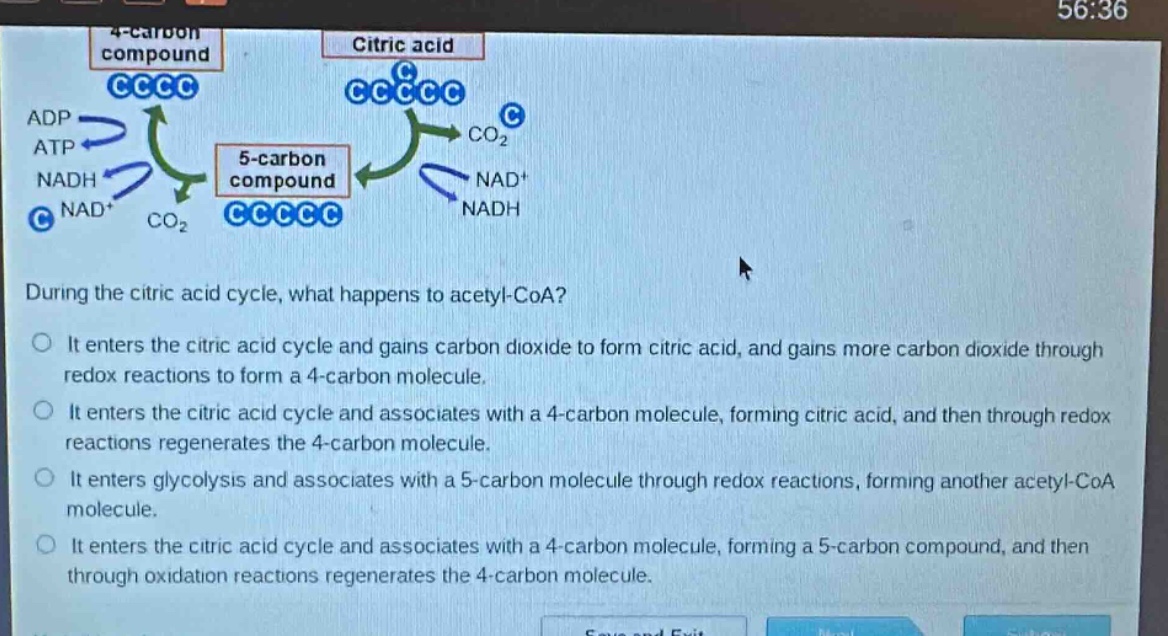
during the citric acid cycle, what happens to acetyl - coa?\no it enters the citric acid cycle and gains carbon dioxide to form citric acid, and gains more carbon dioxide through redox reactions to form a 4 - carbon molecule.\no it enters the citric acid cycle and associates with a 4 - carbon molecule, forming citric acid, and then through redox reactions regenerates the 4 - carbon molecule.\no it enters glycolysis and associates with a 5 - carbon molecule through redox reactions, forming another acetyl - coa molecule.\no it enters the citric acid cycle and associates with a 4 - carbon molecule, forming a 5 - carbon compound, and then through oxidation reactions regenerates the 4 - carbon molecule.
Answer
Brief Explanations:
The citric acid cycle begins with acetyl-CoA (2-carbon) combining with oxaloacetate (4-carbon) to form citric acid (6-carbon). Through redox reactions and decarboxylation, intermediates are oxidized, releasing CO₂ and regenerating oxaloacetate (4-carbon) to continue the cycle. The correct option describes this process without inaccuracies like incorrect carbon counts or misidentifying the pathway (e.g., glycolysis).
Answer:
B. It enters the citric acid cycle and associates with a 4-carbon molecule, forming citric acid, and then through redox reactions regenerates the 4-carbon molecule.