during the citric acid cycle, what happens to acetyl - coa?\nit enters the citric acid cycle and gains…
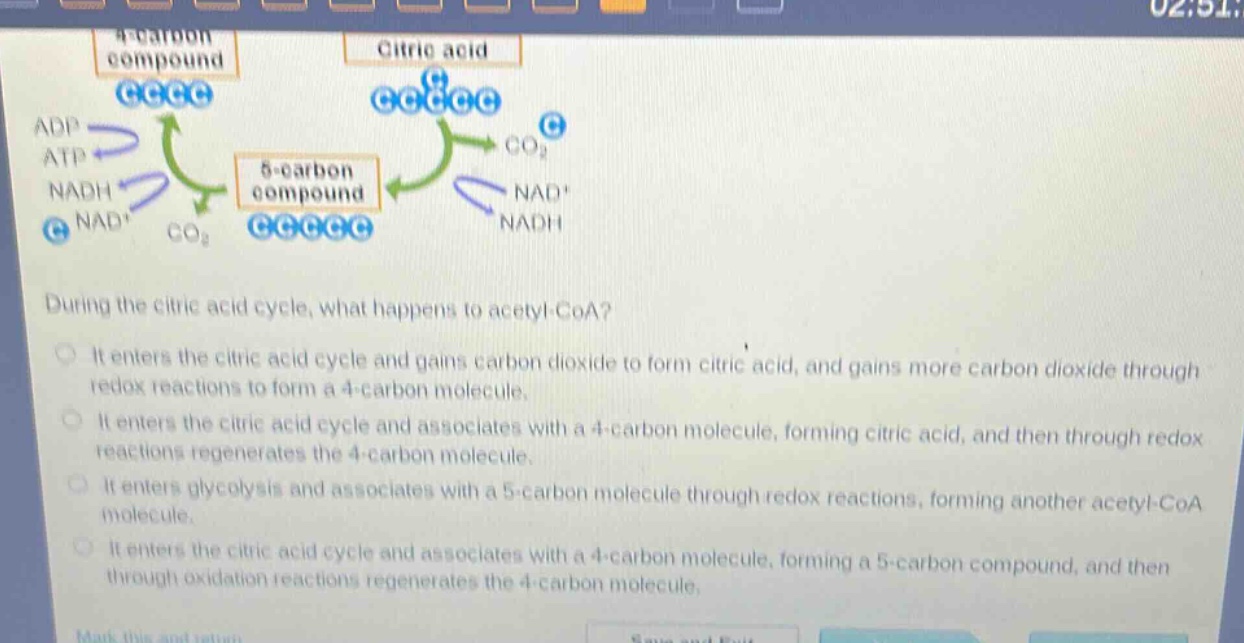
during the citric acid cycle, what happens to acetyl - coa?\nit enters the citric acid cycle and gains carbon dioxide to form citric acid, and gains more carbon dioxide through redox reactions to form a 4 - carbon molecule.\nit enters the citric acid cycle and associates with a 4 - carbon molecule, forming citric acid, and then through redox reactions regenerates the 4 - carbon molecule.\nit enters glycolysis and associates with a 5 - carbon molecule through redox reactions, forming another acetyl - coa molecule.\nit enters the citric acid cycle and associates with a 4 - carbon molecule, forming a 5 - carbon compound, and then through oxidation reactions regenerates the 4 - carbon molecule.
Answer
Brief Explanations:
In the citric - acid cycle, acetyl - CoA enters and combines with a 4 - carbon molecule (oxaloacetate) to form citric acid (a 6 - carbon molecule). Through a series of redox reactions, carbon dioxide is released and the 4 - carbon molecule is regenerated.
Answer:
It enters the citric acid cycle and associates with a 4 - carbon molecule, forming citric acid, and then through redox reactions regenerates the 4 - carbon molecule.