click the blue words to construct the most likely explanation for this change. the change in this population…
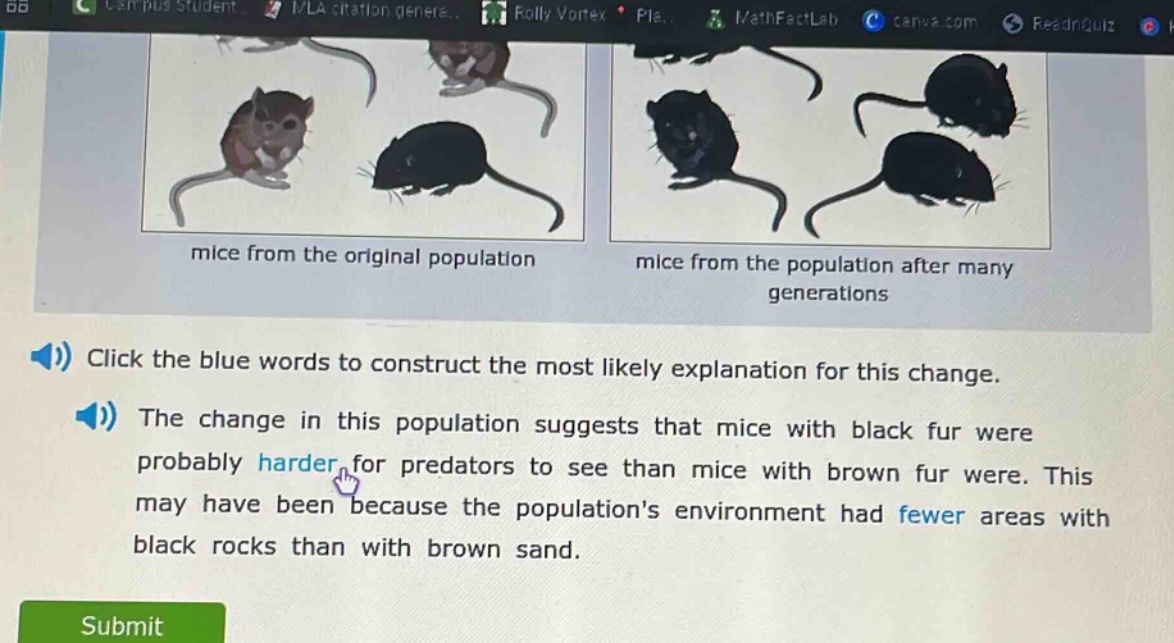
click the blue words to construct the most likely explanation for this change. the change in this population suggests that mice with black fur were probably harder for predators to see than mice with brown fur were. this may have been because the populations environment had fewer areas with black rocks than with brown sand.
Answer
Answer:
The statement contains an error. The change in the population (more black - furred mice over generations) suggests that mice with black fur were probably easier for predators to see than mice with brown fur were if the environment had fewer areas with black rocks than with brown sand. Because in an environment with more brown - colored elements (brown sand), brown - furred mice would be better camouflaged, and if black - furred mice became more prevalent, it means there was some advantage for them, which would be the opposite of what the original statement says.
Brief Explanations:
The explanation is based on the principle of natural selection and camouflage. In an environment with more brown sand than black rocks, brown - furred mice should have a survival advantage due to better camouflage. So the original statement's logic about black - furred mice being "harder" to see in such an environment is incorrect.