cloning is a process that produces individuals that are genetically identical to an original organism…
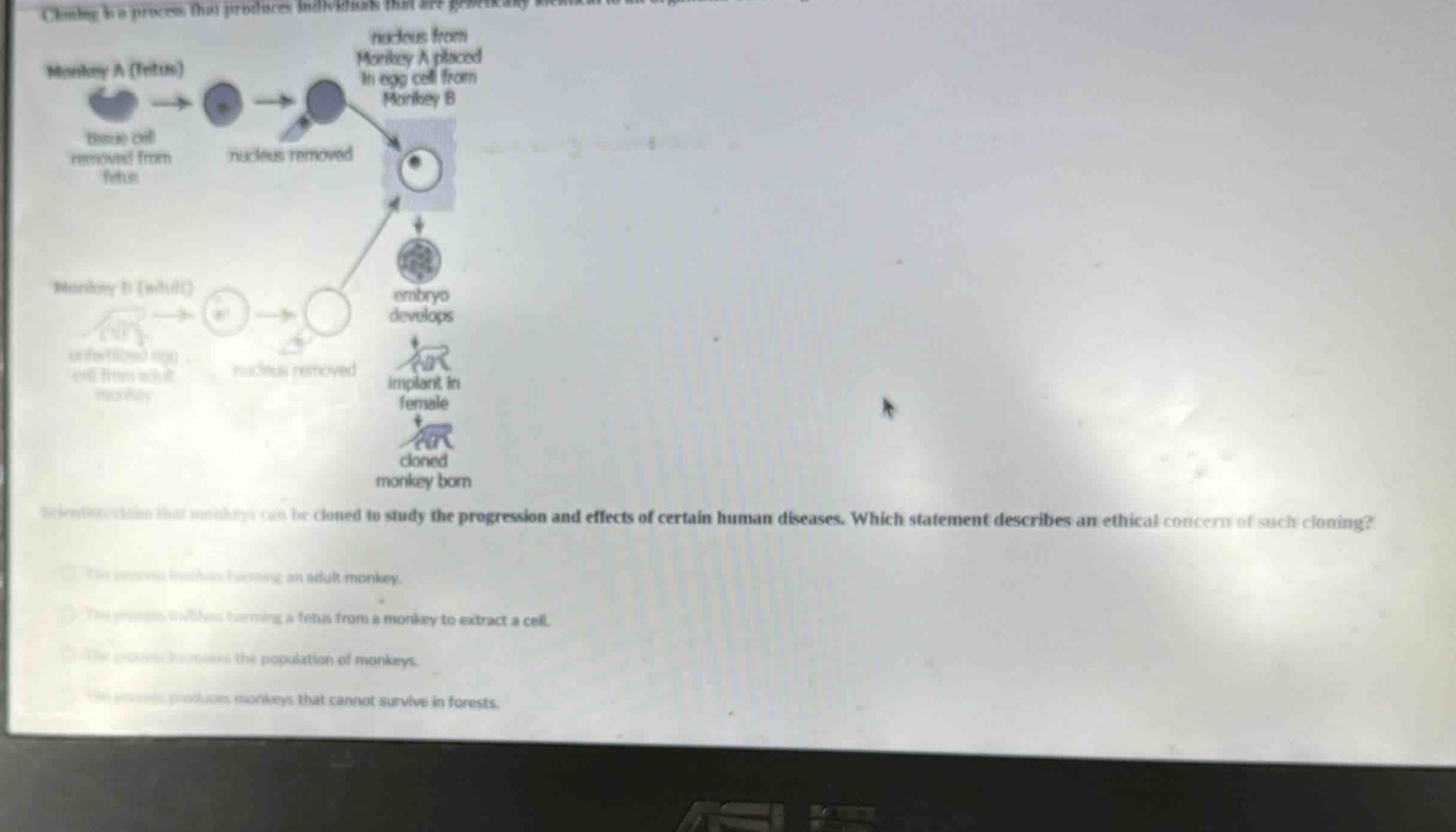
cloning is a process that produces individuals that are genetically identical to an original organism. monkey a (fetus) - tissue cell removed from fetus - nucleus removed - nucleus from monkey a placed in egg cell from monkey b. monkey b (adult) - unfertilized egg cell from adult monkey - nucleus removed - embryo develops - implant in female - cloned monkey born. scientists claim that monkeys can be cloned to study the progression and effects of certain human diseases. which statement describes an ethical concern of such cloning? the process involves harming an adult monkey. the process involves harming a fetus from a monkey to extract a cell. the process increases the population of monkeys. the process produces monkeys that cannot survive in forests.
Answer
Brief Explanations:
Ethical concerns in animal - cloning often relate to the treatment and harm to animals. Extracting a cell from a monkey fetus involves interfering with the natural development and potentially harming the fetus.
Answer:
The process involves harming a fetus from a monkey to extract a cell.