complete the t - chart by categorizing each environmental factor as something that would most likely…
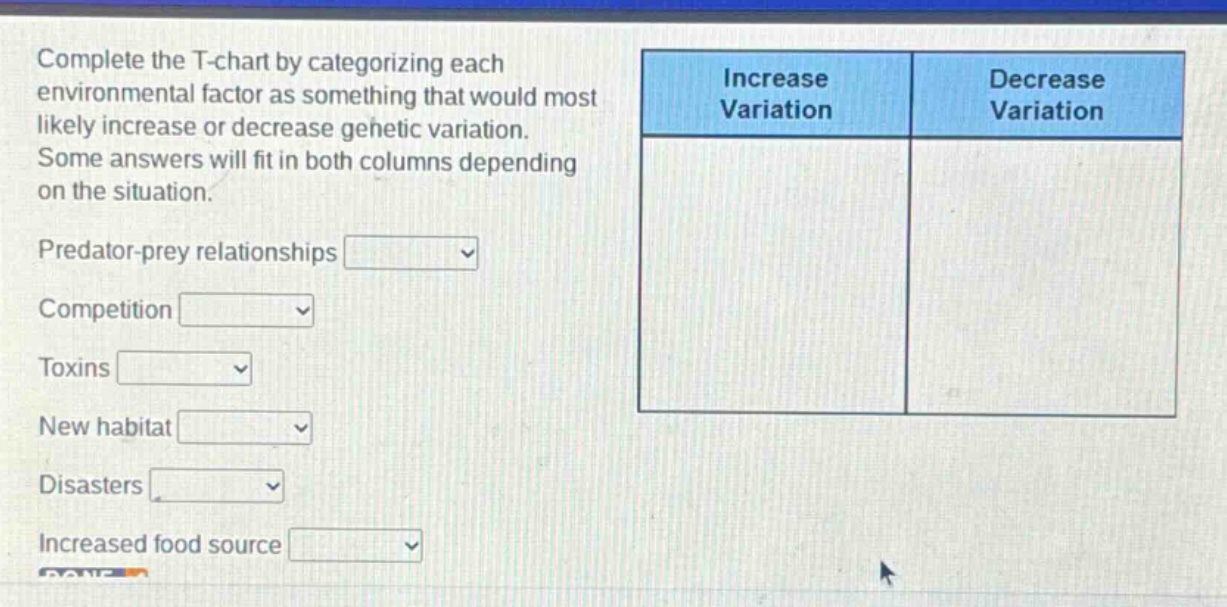
complete the t - chart by categorizing each environmental factor as something that would most likely increase or decrease genetic variation. some answers will fit in both columns depending on the situation. predator - prey relationships competition toxins new habitat disasters increased food source
Answer
Brief Explanations:
- Predator - prey relationships: Can increase variation as different traits may help prey evade predators or predators catch prey. Can also decrease if certain traits are strongly selected against.
- Competition: Increases variation as different strategies for resource - acquisition evolve. Can decrease if only one strategy is highly favored.
- Toxins: Can decrease variation if they cause high mortality of non - resistant individuals. Can increase if new mutations for resistance arise.
- New habitat: Increases variation as organisms adapt to new conditions.
- Disasters: Usually decrease variation by causing mass mortality, but can increase if new opportunities for adaptation arise.
- Increased food source: Can increase variation as population size may grow and more mutations can occur. Can decrease if it leads to less selection pressure.
Answer:
| Increase Variation | Decrease Variation |
|---|---|
| Predator - prey relationships, Competition, Toxins, New habitat, Disasters, Increased food source | Predator - prey relationships, Competition, Toxins, Disasters |