which conclusion is supported by the graph?\nmore than half of the population has the central skin…
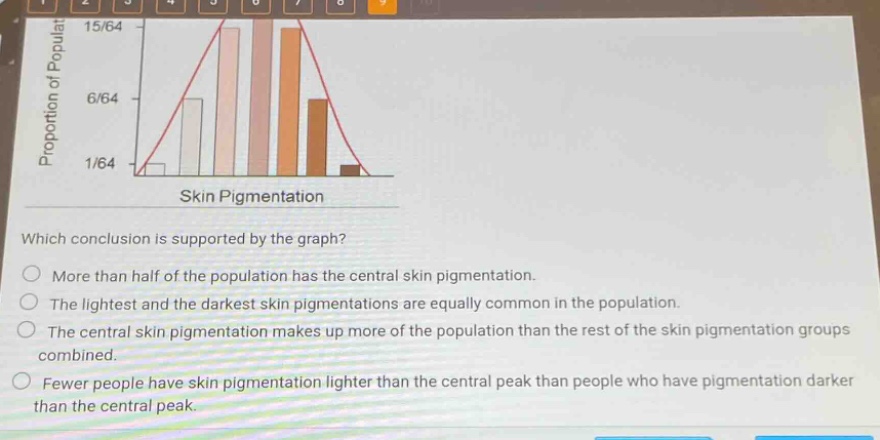
which conclusion is supported by the graph?\nmore than half of the population has the central skin pigmentation.\nthe lightest and the darkest skin pigmentations are equally common in the population.\nthe central skin pigmentation makes up more of the population than the rest of the skin pigmentation groups combined.\nfewer people have skin pigmentation lighter than the central peak than people who have pigmentation darker than the central peak.
Answer
Brief Explanations:
- Analyze each option:
- For the first option, we can't tell if more than half has central pigmentation just from the graph's proportions.
- For the second option, the graph shows that the proportion of the lightest and darkest skin - pigmentations is the same ($\frac{1}{64}$), so they are equally common.
- For the third option, the central pigmentation doesn't make up more than the rest combined.
- For the fourth option, the graph doesn't clearly show that fewer people have lighter - than - central pigmentation compared to darker - than - central pigmentation.
Answer:
The lightest and the darkest skin pigmentations are equally common in the population.