cystic fibrosis is a genetic disorder. it is a recessive trait that is determined by two alleles. suppose…
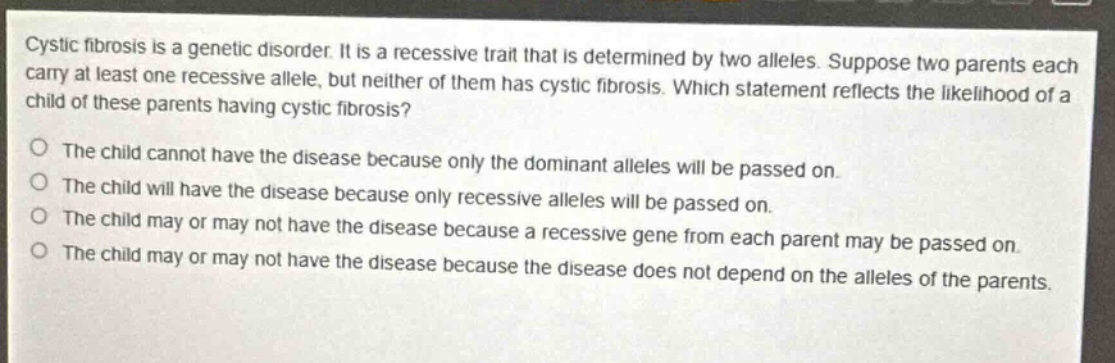
cystic fibrosis is a genetic disorder. it is a recessive trait that is determined by two alleles. suppose two parents each carry at least one recessive allele, but neither of them has cystic fibrosis. which statement reflects the likelihood of a child of these parents having cystic fibrosis? the child cannot have the disease because only the dominant alleles will be passed on. the child will have the disease because only recessive alleles will be passed on. the child may or may not have the disease because a recessive gene from each parent may be passed on. the child may or may not have the disease because the disease does not depend on the alleles of the parents.
Answer
Brief Explanations:
Cystic fibrosis is a recessive - trait genetic disorder. Parents carry at least one recessive allele but don't have the disease, so they are carriers (heterozygous). When they have children, there is a chance that a recessive gene from each parent can be passed on, resulting in the child having the disease, but it's not certain as dominant alleles can also be passed on.
Answer:
The child may or may not have the disease because a recessive gene from each parent may be passed on.