directions: complete the sentences with the words in the box. decay, impression, same, deeper, fossil…
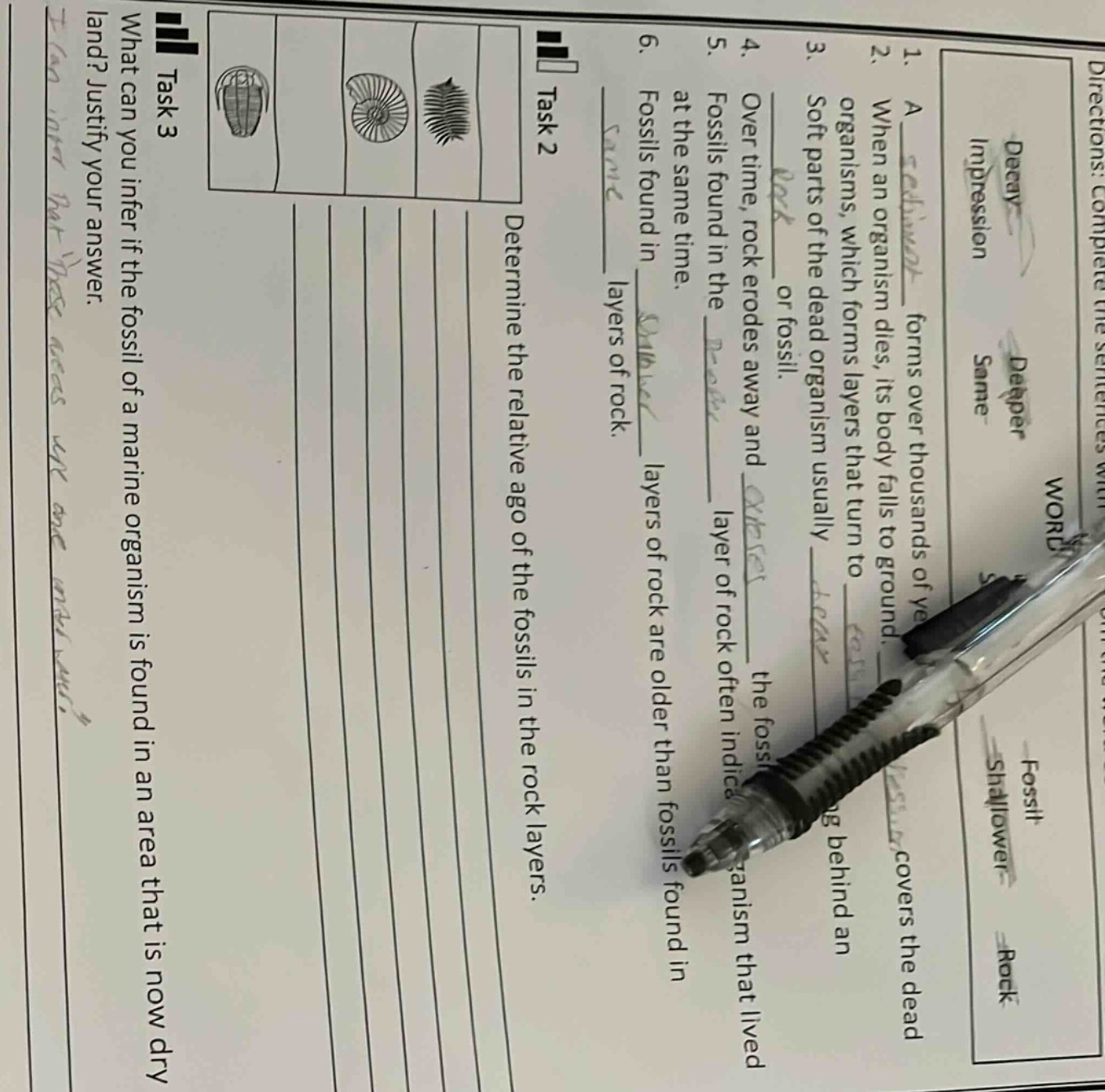
directions: complete the sentences with the words in the box. decay, impression, same, deeper, fossil, shallow - lower, rock. 1. a ________ forms over thousands of years. 2. when an organism dies, its body falls to the ground. organisms, which form layers that turn to ________ or fossil. 3. soft parts of the dead organism usually ________. 4. over time, rock erodes away and the fossil ________ behind an organism that lived at the same time. 5. fossils found in the ________ layer of rock often indicate organisms that lived at the same time. 6. fossils found in the ________ layers of rock are older than fossils found in the ________ layers of rock. task 2: determine the relative age of the fossils in the rock layers. task 3: what can you infer if the fossil of a marine organism is found in an area that is now dry land? justify your answer.
Answer
Brief Explanations:
Fossils of marine organisms in dry - land areas suggest that the area was once underwater. Geological processes such as tectonic movements, sea - level changes, and sedimentation can cause areas that were once marine environments to become dry land over long periods of time. Marine fossils are evidence of the past marine environment of the area.
Answer:
Yes, it can be inferred that the area was once underwater. The presence of marine organism fossils in a now - dry area indicates that the area had a different environmental condition in the past, likely a marine environment, due to geological changes over time.