which discovery supported the endosymbiotic theory?\no dna in mitochondria\no dna in the cell nucleus\no dna…
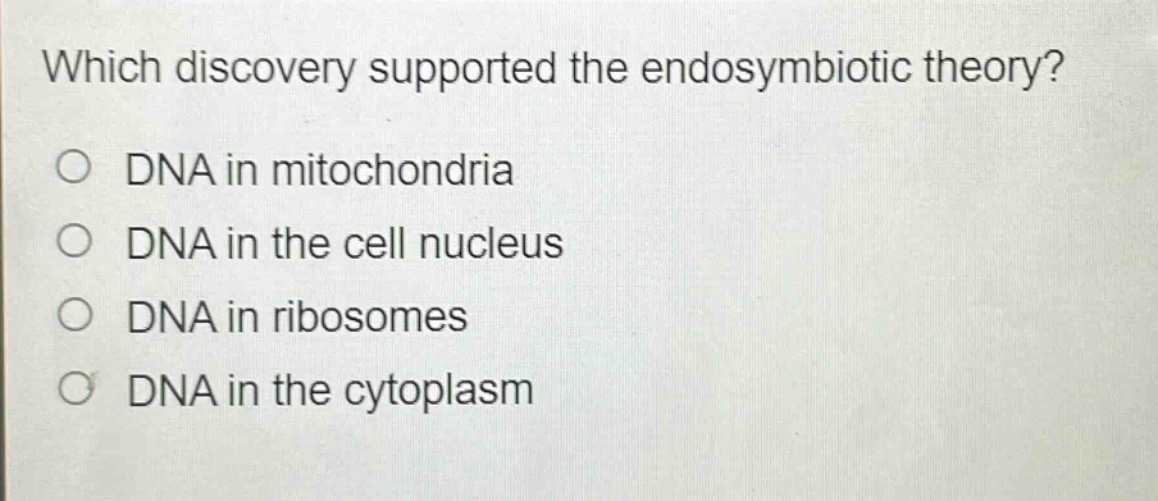
which discovery supported the endosymbiotic theory?\no dna in mitochondria\no dna in the cell nucleus\no dna in ribosomes\no dna in the cytoplasm
Answer
Brief Explanations:
The endosymbiotic theory proposes that mitochondria and chloroplasts were once free - living prokaryotes that were engulfed by a host cell. The presence of DNA in mitochondria supports this as it suggests they were once independent organisms with their own genetic material. Nucleus DNA is typical of eukaryotic cells and not specific to endosymbiosis. Ribosomes don't have DNA, and cytoplasmic DNA is not as key evidence as mitochondrial DNA for endosymbiosis.
Answer:
DNA in mitochondria