drag each label to the correct location. categorize the structures as homologous or analogous. the mammalian…
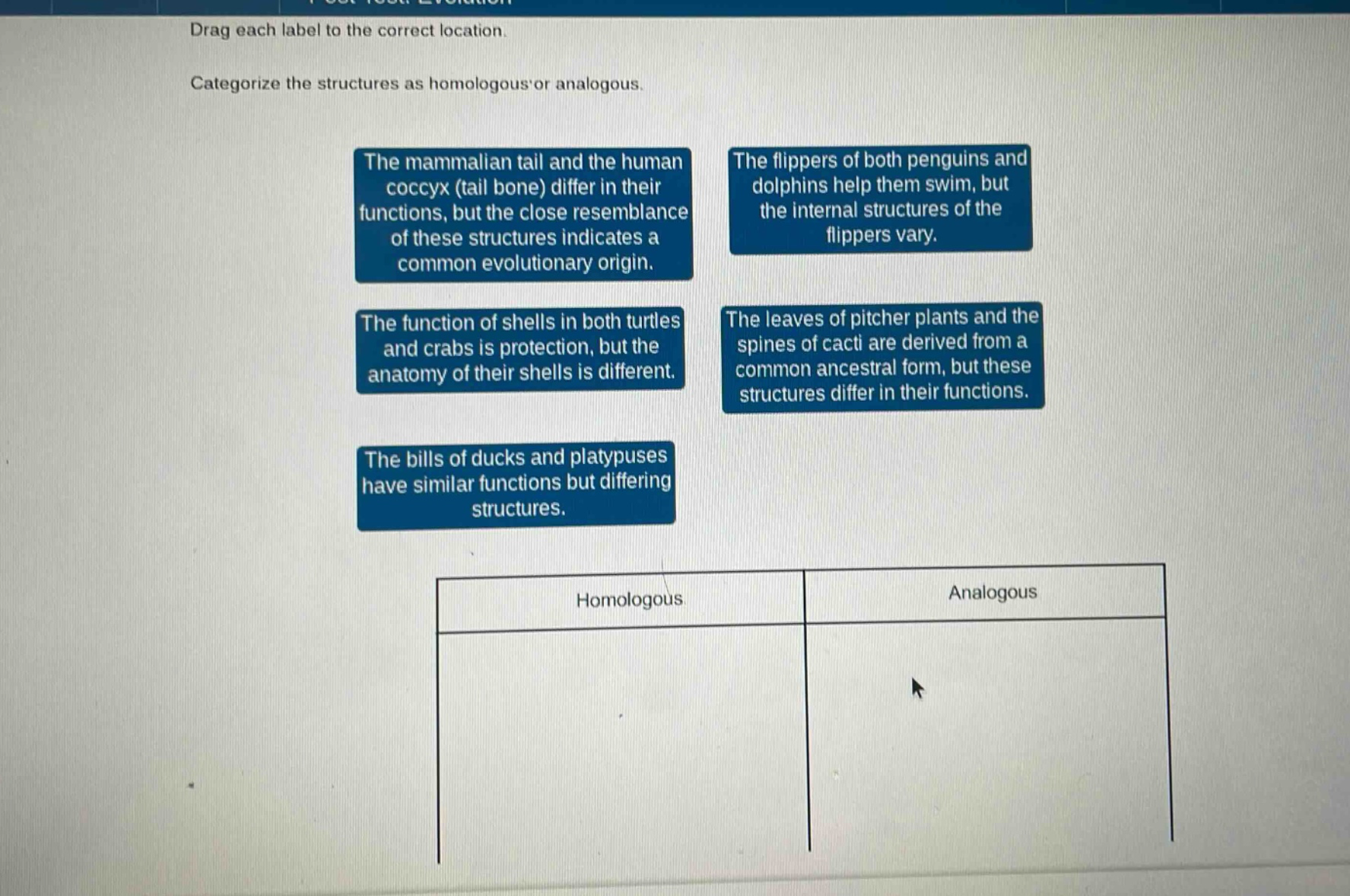
drag each label to the correct location. categorize the structures as homologous or analogous. the mammalian tail and the human coccyx (tail bone) differ in their functions, but the close resemblance of these structures indicates a common evolutionary origin. the flippers of both penguins and dolphins help them swim, but the internal structures of the flippers vary. the function of shells in both turtles and crabs is protection, but the anatomy of their shells is different. the leaves of pitcher plants and the spines of cacti are derived from a common ancestral form, but these structures differ in their functions. the bills of ducks and platypuses have similar functions but differing structures. homologous analogous
Answer
Brief Explanations:
Homologous structures have a common evolutionary origin despite different functions. Analogous structures have similar functions but different evolutionary origins. The mammalian tail - human coccyx and pitcher plant leaves - cactus spines have common ancestry, so they are homologous. The penguin - dolphin flippers, turtle - crab shells, and duck - platypus bills have similar functions due to similar environments but different evolutionary origins, so they are analogous.
Answer:
Homologous: The mammalian tail and the human coccyx (tail bone), The leaves of pitcher plants and the spines of cacti Analogous: The flippers of both penguins and dolphins, The function of shells in both turtles and crabs, The bills of ducks and platypuses