which environmental factor would likely lead to an increase in genetic variation in a population of…
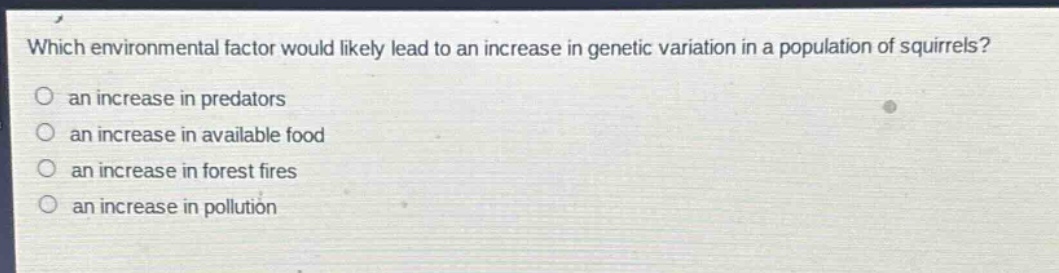
which environmental factor would likely lead to an increase in genetic variation in a population of squirrels?\no an increase in predators\no an increase in available food\no an increase in forest fires\no an increase in pollution
Answer
Brief Explanations:
- An increase in predators: This would likely lead to natural selection, favoring squirrels with certain traits (e.g., better camouflage, faster speed) and reducing genetic variation as only specific genotypes survive.
- An increase in available food: With more food, more squirrels can survive and reproduce. This allows for a larger population size. In a larger population, there is a greater chance of new mutations occurring (random changes in DNA) and also more opportunities for gene flow (if, for example, squirrels from other areas can move in more easily due to less competition for food). Overall, this can lead to an increase in genetic variation.
- An increase in forest fires: This is a catastrophic event that would likely kill many squirrels. It could cause a bottleneck effect (a sharp reduction in population size), which reduces genetic variation as only a small subset of the original gene pool survives.
- An increase in pollution: Pollution can be harmful to squirrels. It may cause health problems, reduce fertility, or lead to selective pressure (e.g., favoring squirrels with genes that help them tolerate pollutants). This is more likely to reduce or shift genetic variation rather than increase it.
Answer:
an increase in available food