evolution is change in a population over time and includes the gene pools of that population. how does…
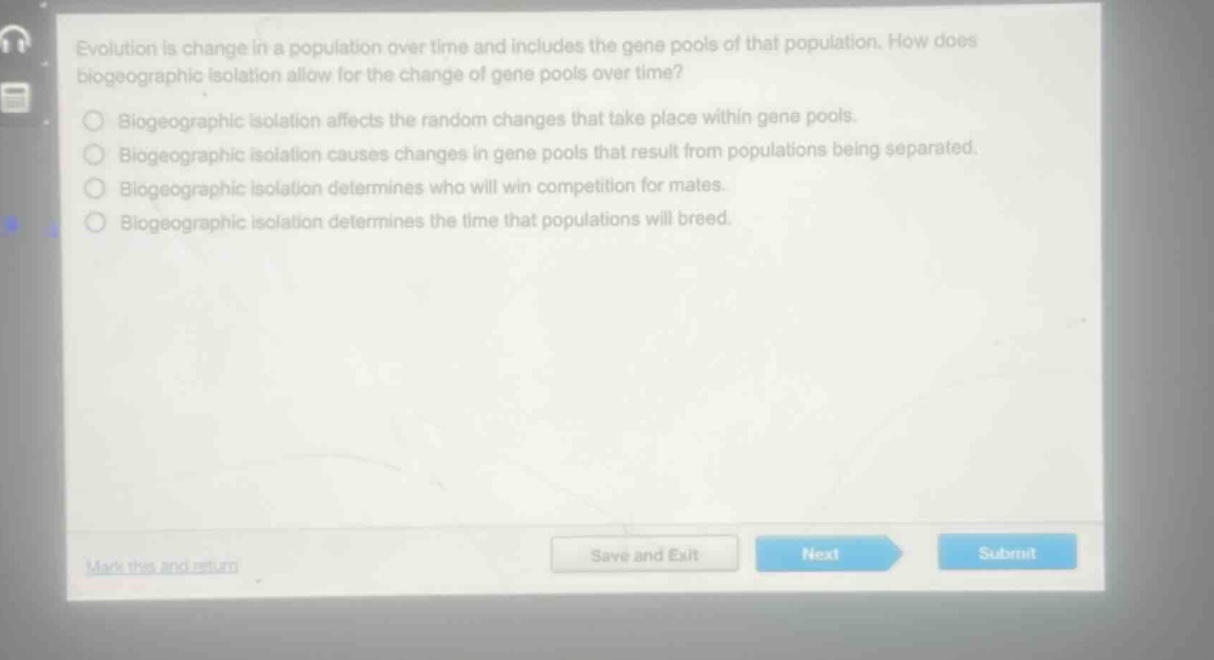
evolution is change in a population over time and includes the gene pools of that population. how does biogeographic isolation allow for the change of gene pools over time?\nbiogeographic isolation affects the random changes that take place within gene pools.\nbiogeographic isolation causes changes in gene pools that result from populations being separated.\nbiogeographic isolation determines who will win competition for mates.\nbiogeographic isolation determines the time that populations will breed.
Answer
Answer:
B. Biogeographic isolation causes changes in gene pools that result from populations being separated.
Brief Explanations:
Biogeographic isolation refers to the separation of populations of a species due to geographical barriers. When populations are separated, they are no longer able to interbreed freely. Over time, different evolutionary pressures (such as different environmental conditions, availability of resources, etc.) can act on each separated population. This can lead to genetic changes (mutations, genetic drift, natural selection) occurring independently in each population. As a result, the gene pools of the separated populations change over time.
Option A is incorrect because biogeographic isolation is not about random changes within a single gene pool but about changes due to separation. Option C is incorrect as biogeographic isolation is not directly about competition for mates (which is more related to sexual selection mechanisms within a population or between closely related populations in the same area). Option D is incorrect because biogeographic isolation is not about determining the breeding time of populations.