5. excess nutrients from fertilizers or sewage can enter a pond and result in an increase in the population…
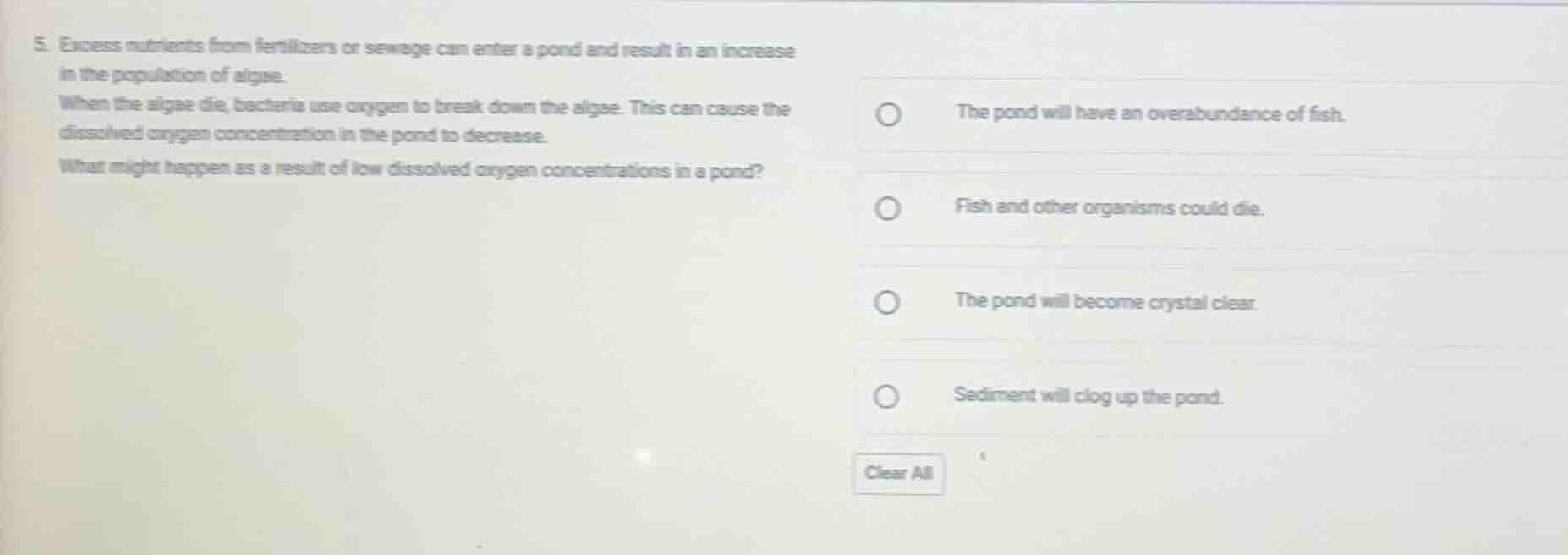
5. excess nutrients from fertilizers or sewage can enter a pond and result in an increase in the population of algae.\nwhen the algae die, bacteria use oxygen to break down the algae. this can cause the dissolved oxygen concentration in the pond to decrease.\nwhat might happen as a result of low dissolved oxygen concentrations in a pond?\nthe pond will have an overabundance of fish.\nfish and other organisms could die.\nthe pond will become crystal clear.\nsediment will clog up the pond.\nclear all
Answer
Brief Explanations:
Aquatic organisms like fish rely on dissolved oxygen in water to respire. Low dissolved oxygen levels mean there is not enough oxygen for these organisms to survive, leading to potential die-offs. The other options are incorrect: low oxygen would not cause more fish, clear water, or sediment clogging directly from this oxygen depletion event.
Answer:
B. Fish and other organisms could die.