farm milk components and their use among dairy products have shifted over time by angel teran and jerry…
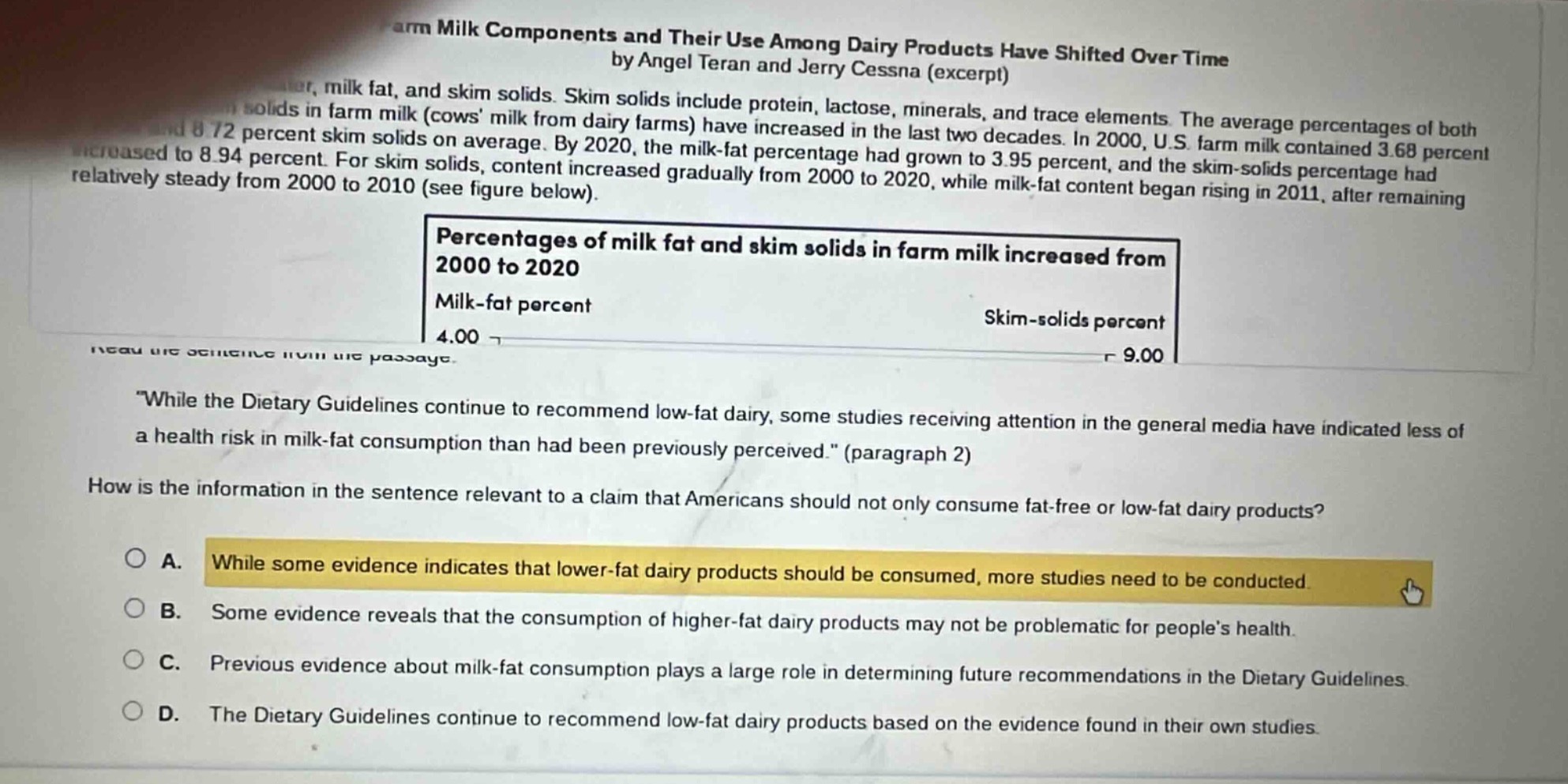
farm milk components and their use among dairy products have shifted over time by angel teran and jerry cessna (excerpt)\nwater, milk fat, and skim solids. skim solids include protein, lactose, minerals, and trace elements. the average percentages of both milk - fat and skim solids in farm milk (cows milk from dairy farms) have increased in the last two decades. in 2000, u.s. farm milk contained 3.68 percent milk - fat and 8.72 percent skim solids on average. by 2020, the milk - fat percentage had grown to 3.95 percent, and the skim - solids percentage had increased to 8.94 percent. for skim solids, content increased gradually from 2000 to 2020, while milk - fat content began rising in 2011, after remaining relatively steady from 2000 to 2010 (see figure below).\npercentages of milk fat and skim solids in farm milk increased from 2000 to 2020\nmilk - fat percent\n4.00\nskim - solids percent\n9.00\n\while the dietary guidelines continue to recommend low - fat dairy, some studies receiving attention in the general media have indicated less of a health risk in milk - fat consumption than had been previously perceived.\ (paragraph 2)\nhow is the information in the sentence relevant to a claim that americans should not only consume fat - free or low - fat dairy products?\na. while some evidence indicates that lower - fat dairy products should be consumed, more studies need to be conducted\nb. some evidence reveals that the consumption of higher - fat dairy products may not be problematic for peoples health.\nc. previous evidence about milk - fat consumption plays a large role in determining future recommendations in the dietary guidelines\nd. the dietary guidelines continue to recommend low - fat dairy products based on the evidence found in their own studies.
Answer
Brief Explanations:
The sentence states that some studies in the general media have indicated less health - risk in milk - fat consumption than previously thought. This supports the idea that consuming higher - fat dairy products may not be bad for health, which is relevant to the claim that Americans should not only consume fat - free or low - fat dairy products.
Answer:
B. Some evidence reveals that the consumption of higher - fat dairy products may not be problematic for people’s health.