the graphs above show a change in distribution of beak phenotypes x, y, and z over 10 generations. notice…
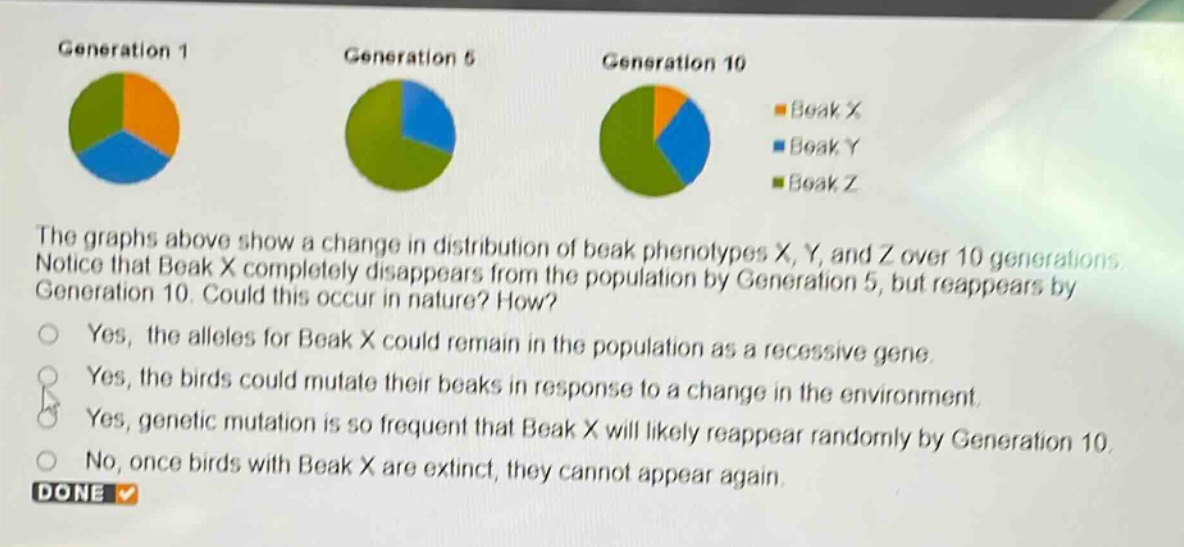
the graphs above show a change in distribution of beak phenotypes x, y, and z over 10 generations. notice that beak x completely disappears from the population by generation 5, but reappears by generation 10. could this occur in nature? how?\nyes, the alleles for beak x could remain in the population as a recessive gene.\nyes, the birds could mutate their beaks in response to a change in the environment.\nyes, genetic mutation is so frequent that beak x will likely reappear randomly by generation 10.\nno, once birds with beak x are extinct, they cannot appear again.
Answer
Brief Explanations:
Recessive genes can remain hidden in a population's gene - pool. Even if the phenotype associated with a recessive gene disappears temporarily, the gene can still be present in heterozygous individuals. When the right genetic combinations occur in subsequent generations, the recessive phenotype can reappear. Mutations are not as frequent as suggested in the third option and the idea of birds mutating their beaks in response to environment in the second option is an incorrect view of mutation (mutations are random, not a directed response). Once a phenotype disappears, it can reappear if the genes for it are still in the population.
Answer:
A. Yes, the alleles for Beak X could remain in the population as a recessive gene.