the graphs above show a change in distribution of beak phenotypes x, y, and z over 10 generations. notice…
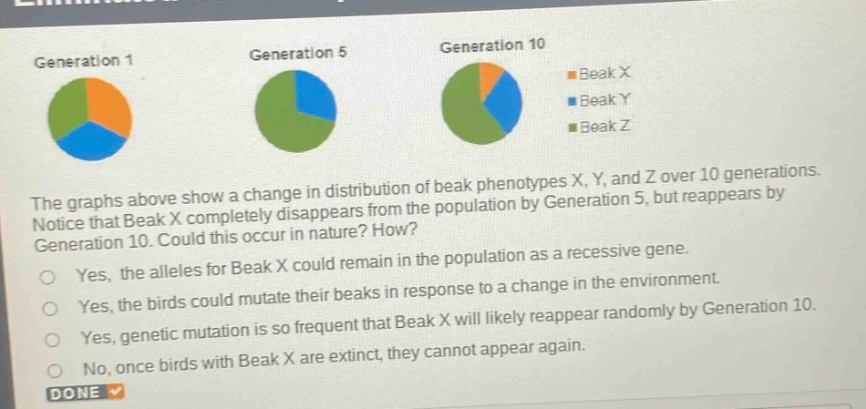
the graphs above show a change in distribution of beak phenotypes x, y, and z over 10 generations. notice that beak x completely disappears from the population by generation 5, but reappears by generation 10. could this occur in nature? how?\nyes, the alleles for beak x could remain in the population as a recessive gene.\nyes, the birds could mutate their beaks in response to a change in the environment.\nyes, genetic mutation is so frequent that beak x will likely reappear randomly by generation 10.\nno, once birds with beak x are extinct, they cannot appear again.\ndone
Answer
Brief Explanations:
In genetics, a trait can disappear phenotypically but alleles can remain as recessive genes in the population's gene - pool. When conditions are right, the recessive trait can reappear. Mutations can also cause the re - emergence of a trait, but the most likely reason here is the presence of recessive alleles.
Answer:
Yes, the alleles for Beak X could remain in the population as a recessive gene.