gregor mendel used pea plants that were heterozygous for each of two traits—seed color and seed shape—to…
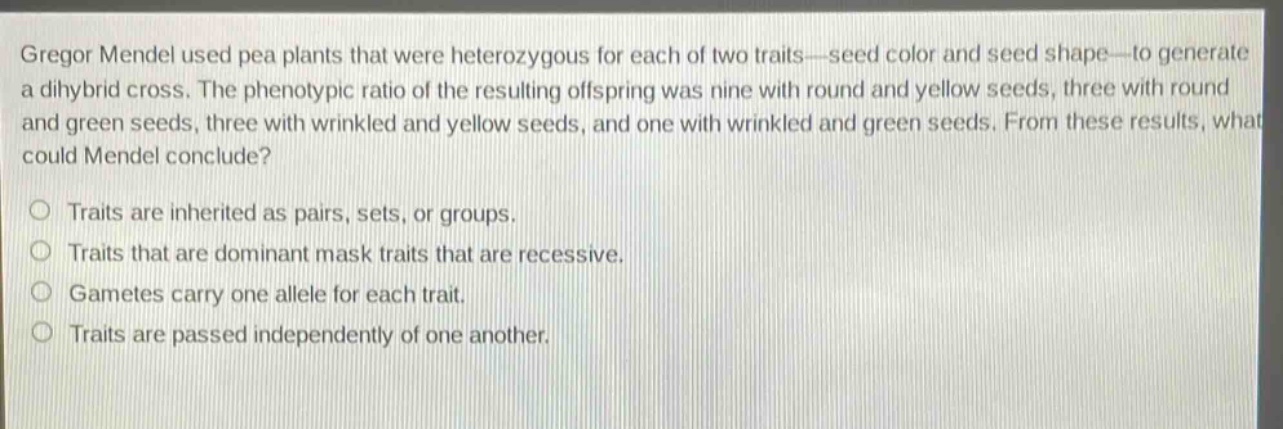
gregor mendel used pea plants that were heterozygous for each of two traits—seed color and seed shape—to generate a dihybrid cross. the phenotypic ratio of the resulting offspring was nine with round and yellow seeds, three with round and green seeds, three with wrinkled and yellow seeds, and one with wrinkled and green seeds. from these results, what could mendel conclude?\n\ntraits are inherited as pairs, sets, or groups.\ntraits that are dominant mask traits that are recessive.\ngametes carry one allele for each trait.\ntraits are passed independently of one another.
Answer
Answer:
Traits are passed independently of one another.
Brief Explanations:
Mendel's dihybrid cross shows 9:3:3:1 ratio, indicating independent assortment of traits. Each trait is inherited without influencing the inheritance of the other, supporting the idea that traits are passed independently.