highlights: - density of nutrients in farm milk has grown in the last two decades. in 2019, the milk - fat…
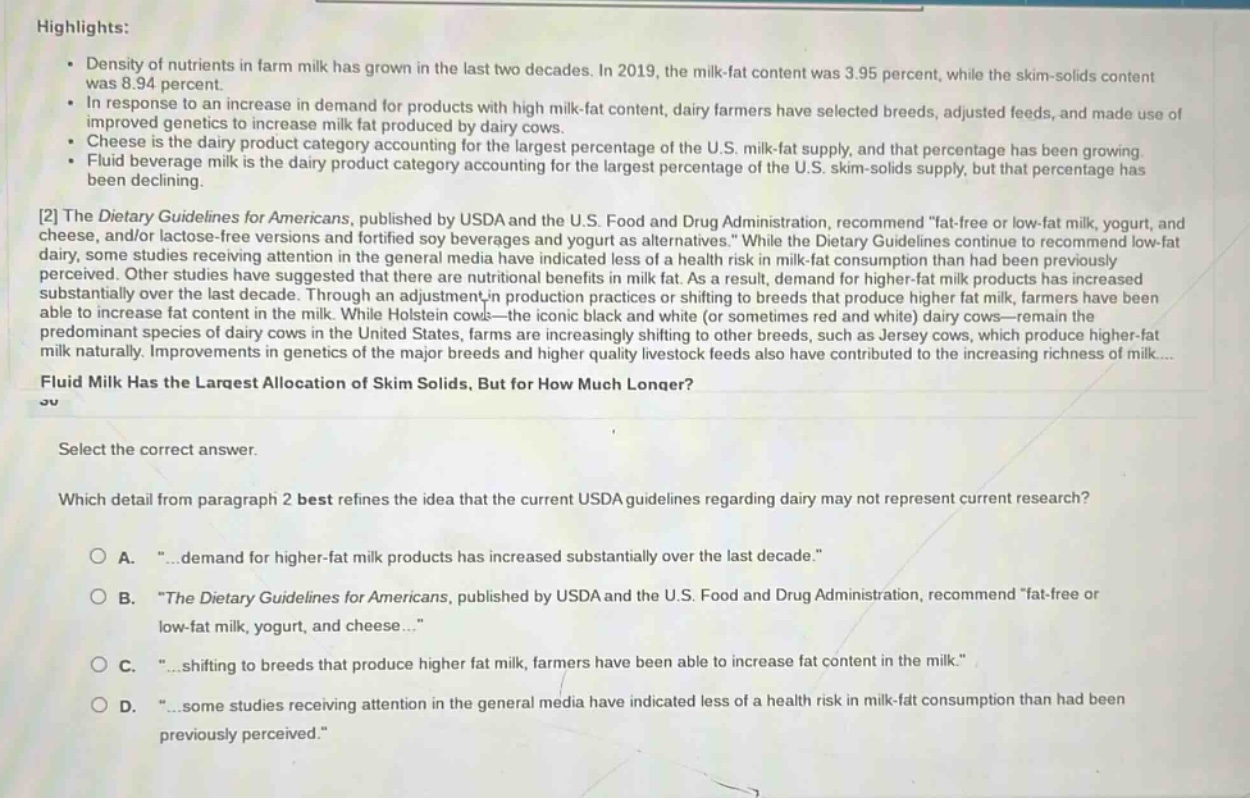
highlights: - density of nutrients in farm milk has grown in the last two decades. in 2019, the milk - fat content was 3.95 percent, while the skim - solids content was 8.94 percent. - in response to an increase in demand for products with high milk - fat content, dairy farmers have selected breeds, adjusted feeds, and made use of improved genetics to increase milk fat produced by dairy cows. - cheese is the dairy product category accounting for the largest percentage of the u.s. milk - fat supply, and that percentage has been growing. - fluid beverage milk is the dairy product category accounting for the largest percentage of the u.s. skim - solids supply, but that percentage has been declining. 2 the dietary guidelines for americans, published by usda and the u.s. food and drug administration, recommend \fat - free or low - fat milk, yogurt, and cheese, and/or lactose - free versions and fortified soy beverages and yogurt as alternatives.\ while the dietary guidelines continue to recommend low - fat dairy, some studies receiving attention in the general media have indicated less of a health risk in milk - fat consumption than had been previously perceived. other studies have suggested that there are nutritional benefits in milk fat. as a result, demand for higher - fat milk products has increased substantially over the last decade. through an adjustment in production practices or shifting to breeds that produce higher fat milk, farmers have been able to increase fat content in the milk. while holstein cows—the iconic black and white (or sometimes red and white) dairy cows—remain the predominant species of dairy cows in the united states, farms are increasingly shifting to other breeds, such as jersey cows, which produce higher - fat milk naturally. improvements in genetics of the major breeds and higher quality livestock feeds also have contributed to the increasing richness of milk... fluid milk has the largest allocation of skim solids, but for how much longer? select the correct answer. which detail from paragraph 2 best refines the idea that the current usda guidelines regarding dairy may not represent current research? a. \...demand for higher - fat milk products has increased substantially over the last decade.\ b. \the dietary guidelines for americans, published by usda and the u.s. food and drug administration, recommend \fat - free or low - fat milk, yogurt, and cheese...\ c. \...shifting to breeds that produce higher fat milk, farmers have been able to increase fat content in the milk.\ d. \...some studies receiving attention in the general media have indicated less of a health risk in milk - fat consumption than had been previously perceived.\
Answer
Brief Explanations:
The USDA guidelines recommend low - fat dairy. However, some studies now suggest less health risk in milk - fat consumption than previously thought. This shows a discrepancy between the guidelines and current research. Option D directly mentions these studies indicating a different view on milk - fat health risk.
Answer:
D. "…some studies receiving attention in the general media have indicated less of a health risk in milk - fat consumption than had been previously perceived."