hypothesis: if the type of the food available changes, then the frequency of beak types will change, because…
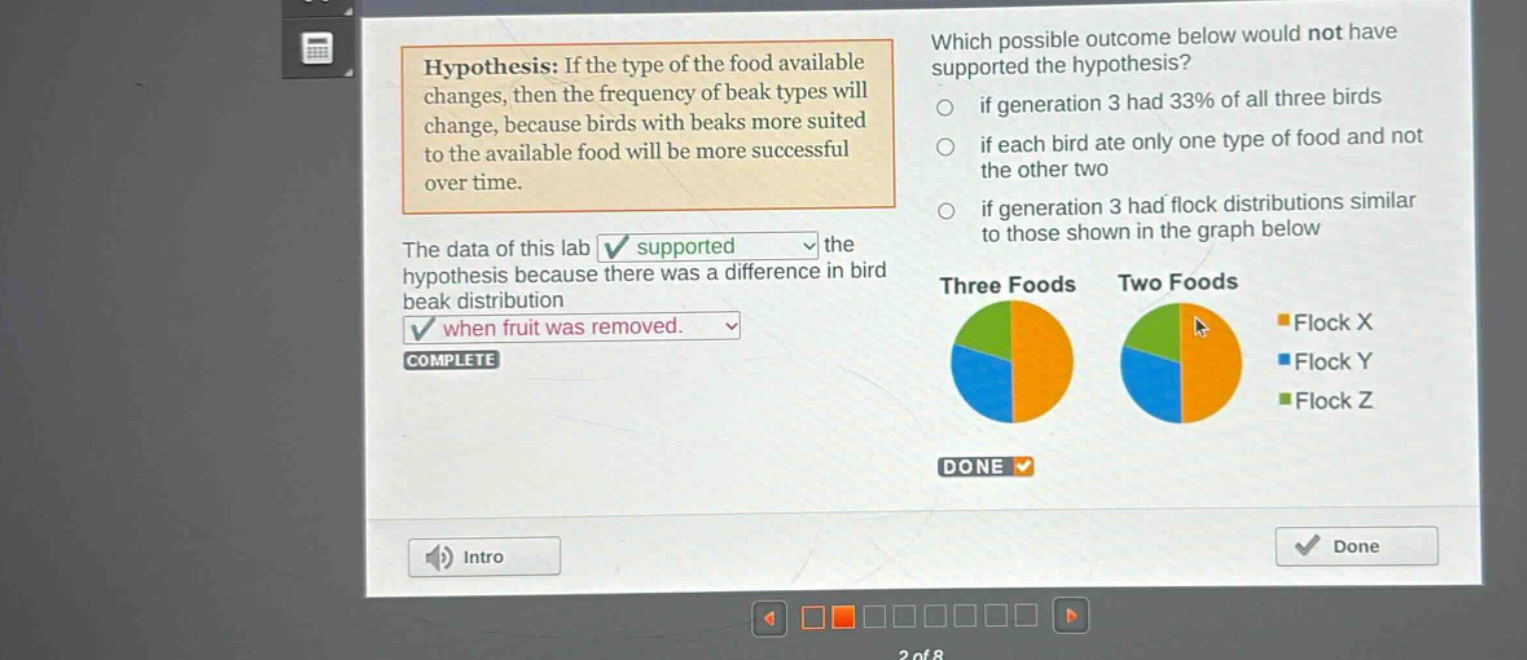
hypothesis: if the type of the food available changes, then the frequency of beak types will change, because birds with beaks more suited to the available food will be more successful over time. the data of this lab supported the hypothesis because there was a difference in bird beak distribution when fruit was removed. which possible outcome below would not have supported the hypothesis? if generation 3 had 33% of all three birds if each bird ate only one type of food and not the other two if generation 3 had flock distributions similar to those shown in the graph below three foods two foods flock x flock y flock z
Answer
Brief Explanations:
The hypothesis posits that a change in food type leads to a change in beak - type frequency. If each bird ate only one type of food and not the others, it implies no change in food availability for each bird type, and thus no reason for beak - type frequency to change. This outcome would not support the hypothesis. The other two options suggest changes in bird populations which could be due to food - type changes.
Answer:
if each bird ate only one type of food and not the other two