identify how the physical barriers of the immune system protect the body against pathogens. check all that…
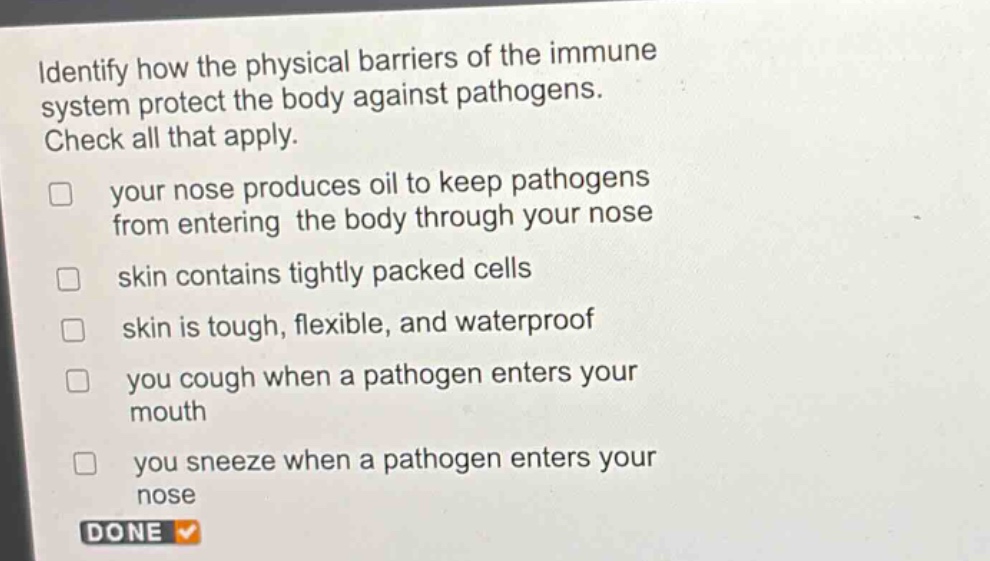
identify how the physical barriers of the immune system protect the body against pathogens. check all that apply. your nose produces oil to keep pathogens from entering the body through your nose skin contains tightly packed cells skin is tough, flexible, and waterproof you cough when a pathogen enters your mouth you sneeze when a pathogen enters your nose done
Answer
Brief Explanations:
The skin's tightly - packed cells, toughness, flexibility, and waterproof nature act as physical barriers. Coughing when a pathogen enters the mouth and sneezing when it enters the nose are also physical defense mechanisms. The nose does not produce oil for this purpose; sebum is produced by skin glands, not in the nose in this context.
Answer:
- skin contains tightly packed cells
- skin is tough, flexible, and waterproof
- you cough when a pathogen enters your mouth
- you sneeze when a pathogen enters your nose