location of fossil x\nnorthern europe rock strata\nthe diagram shows the layer at which a specific indicator…
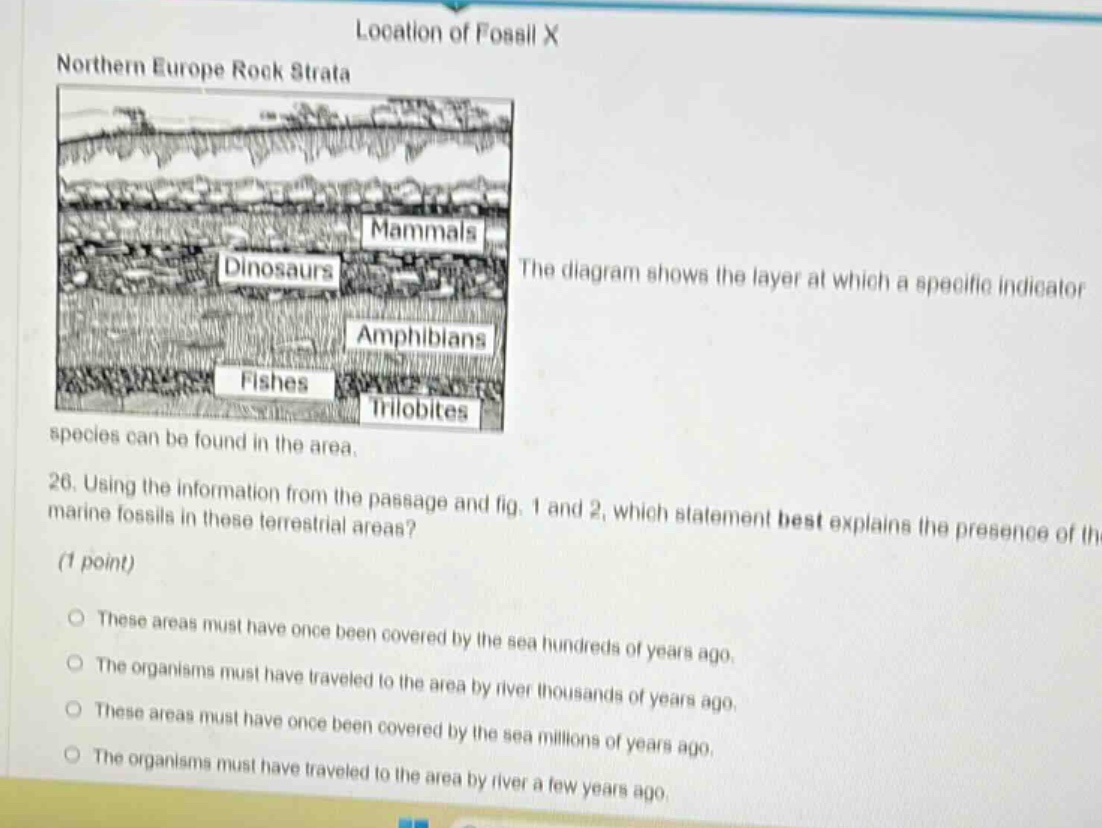
location of fossil x\nnorthern europe rock strata\nthe diagram shows the layer at which a specific indicator species can be found in the area.\n26. using the information from the passage and fig. 1 and 2, which statement best explains the presence of marine fossils in these terrestrial areas? (1 point)\no these areas must have once been covered by the sea hundreds of years ago.\no the organisms must have traveled to the area by river thousands of years ago.\no these areas must have once been covered by the sea millions of years ago.\no the organisms must have traveled to the area by river a few years ago.
Answer
Brief Explanations:
Fossils of marine - organisms in terrestrial areas suggest that the land was once submerged under the sea. The rock - strata and the types of fossils indicate a long - term geological process, which implies millions of years ago rather than hundreds or a few years ago. Also, it is more likely that the area was once sea rather than the organisms traveling by river to the area.
Answer:
These areas must have once been covered by the sea millions of years ago.