3 look at this food web. then answer the questions.\na name two producers in the food web.\nb name three…
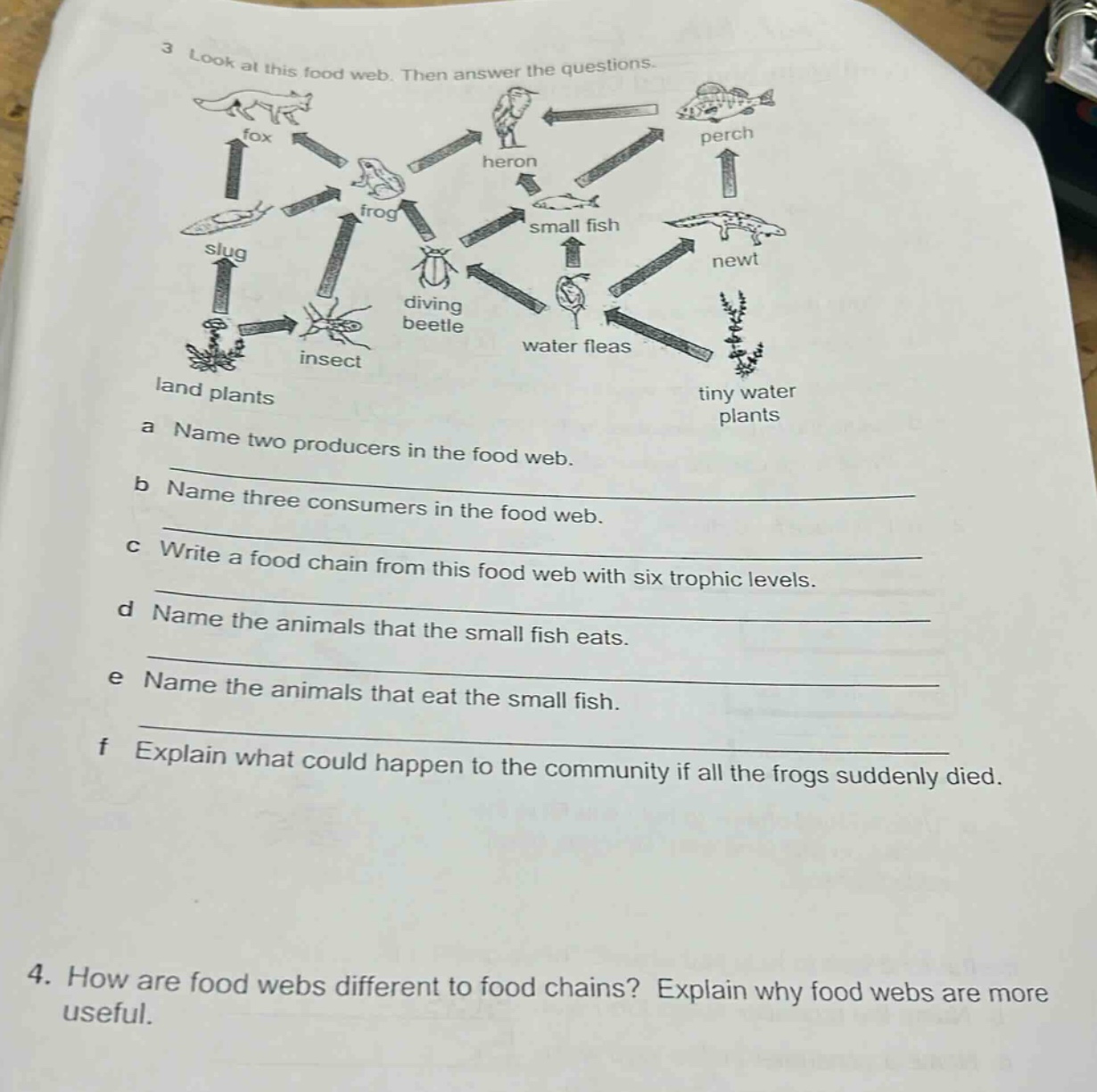
3 look at this food web. then answer the questions.\na name two producers in the food web.\nb name three consumers in the food web.\nc write a food chain from this food web with six trophic levels.\nd name the animals that the small fish eats.\ne name the animals that eat the small fish.\nf explain what could happen to the community if all the frogs suddenly died.\n4. how are food webs different to food chains? explain why food webs are more useful.
Answer
Brief Explanations:
a. Producers are organisms that make their own food, typically plants.
b. Consumers are organisms that eat other organisms.
c. A food chain with six trophic levels follows energy flow from producer to top predator.
d. Identify organisms with arrows pointing to small fish (prey).
e. Identify organisms with arrows from small fish (predators).
f. Analyze cascading effects of frog loss on prey and predators in the food web.
Answer:
a. Land plants, tiny water plants
b. Insect, frog, small fish (or other valid consumers from the web)
c. Tiny water plants → water fleas → small fish → perch → heron → fox (or valid sequence with six levels)
d. Water fleas
e. Heron, perch
f. Insects and diving beetles (frog prey) might increase, reducing land plant/tiny water plant populations. Heron (frog predator) might decrease or switch prey, affecting other species.