a male cardinals red color is an example of a trait affected by natural selection. the females of the…
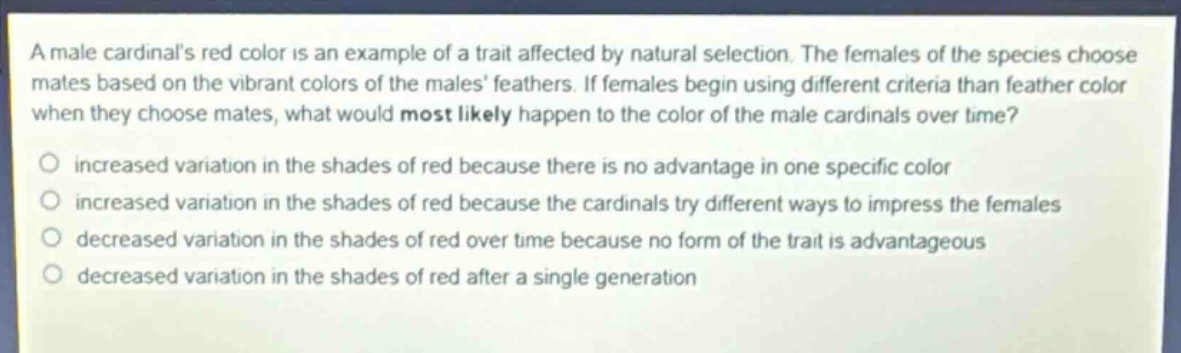
a male cardinals red color is an example of a trait affected by natural selection. the females of the species choose mates based on the vibrant colors of the males feathers. if females begin using different criteria than feather color when they choose mates, what would most likely happen to the color of the male cardinals over time?\no increased variation in the shades of red because there is no advantage in one specific color\no increased variation in the shades of red because the cardinals try different ways to impress the females\no decreased variation in the shades of red over time because no form of the trait is advantageous\no decreased variation in the shades of red after a single generation
Answer
Brief Explanations:
If female cardinals no longer choose mates based on feather - color, the red - color trait loses its selective advantage. Without selection pressure for a particular shade of red, there will be no advantage in any specific color, leading to decreased variation in the shades of red over time as no form of the trait is advantageous.
Answer:
decreased variation in the shades of red over time because no form of the trait is advantageous