mammals that live in the arctic ocean have a large amount of blubber, which is a fatty tissue just beneath…
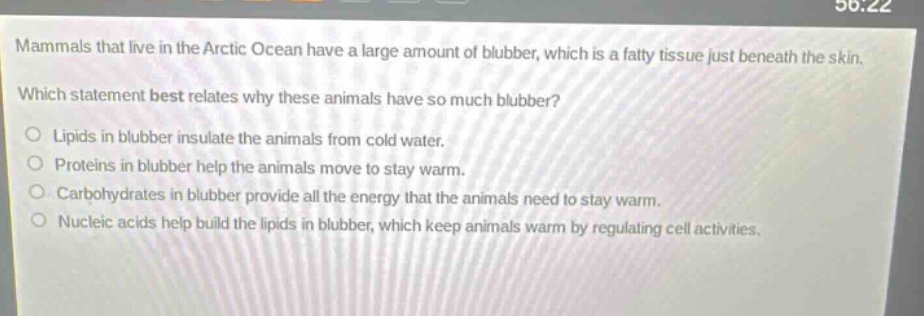
mammals that live in the arctic ocean have a large amount of blubber, which is a fatty tissue just beneath the skin. which statement best relates why these animals have so much blubber? lipids in blubber insulate the animals from cold water. proteins in blubber help the animals move to stay warm. carbohydrates in blubber provide all the energy that the animals need to stay warm. nucleic acids help build the lipids in blubber, which keep animals warm by regulating cell activities.
Answer
Brief Explanations:
Blubber is a lipid - rich tissue. Lipids are known for their insulating properties. In cold Arctic waters, this insulation helps mammals stay warm. Proteins are mainly for structure, movement, and enzymatic functions, not for insulation in this context. Carbohydrates are energy - sources but not the main component of blubber for insulation. Nucleic acids are related to genetic information and cell regulation, not directly to insulation by blubber.
Answer:
Lipids in blubber insulate the animals from cold water.