many colors seen in organisms are produced in certain cells that have a receptor protein that controls the…
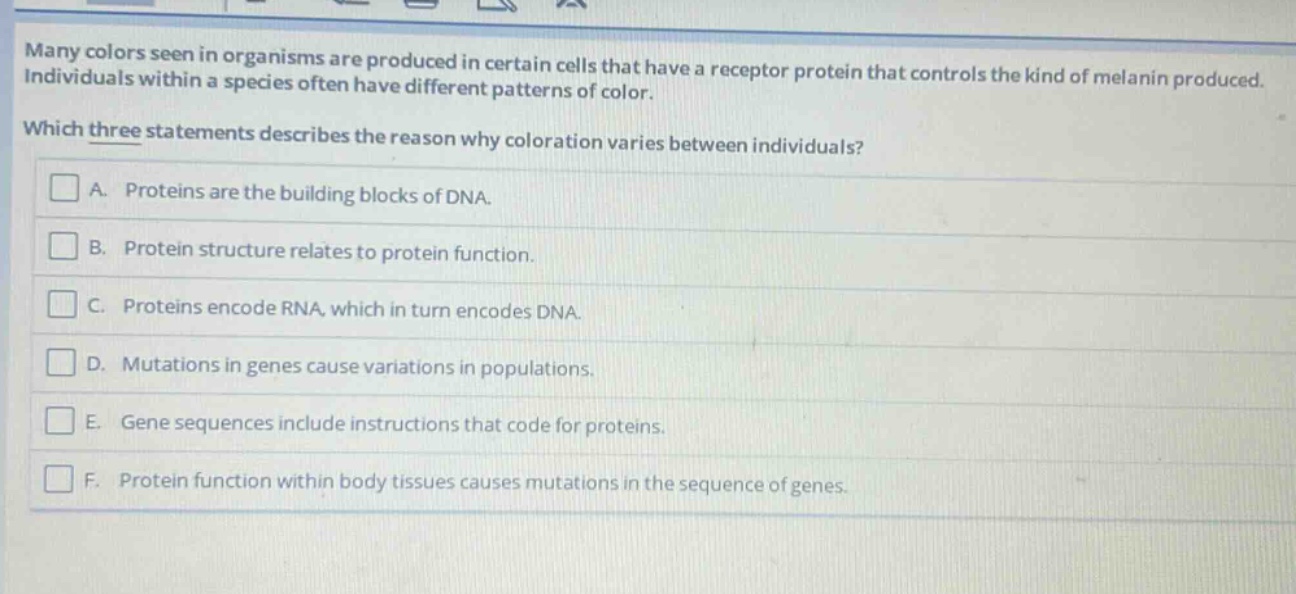
many colors seen in organisms are produced in certain cells that have a receptor protein that controls the kind of melanin produced. individuals within a species often have different patterns of color. which three statements describes the reason why coloration varies between individuals? a. proteins are the building blocks of dna. b. protein structure relates to protein function. c. proteins encode rna, which in turn encodes dna. d. mutations in genes cause variations in populations. e. gene sequences include instructions that code for proteins. f. protein function within body tissues causes mutations in the sequence of genes.
Answer
Brief Explanations:
- Option A is incorrect as nucleotides are building - blocks of DNA, not proteins.
- Option B is correct as different protein structures lead to different functions, which can affect color - related protein functions.
- Option C is incorrect as DNA encodes RNA which encodes proteins.
- Option D is correct as gene mutations can cause variations in traits like coloration.
- Option E is correct as genes code for proteins, and variations in genes can lead to different color - related proteins.
- Option F is incorrect as protein function doesn't typically cause gene mutations in this context.
Answer:
B. Protein structure relates to protein function. D. Mutations in genes cause variations in populations. E. Gene sequences include instructions that code for proteins.