many people visit us national parks. yosemite national park, for instance, receives four million visitors…
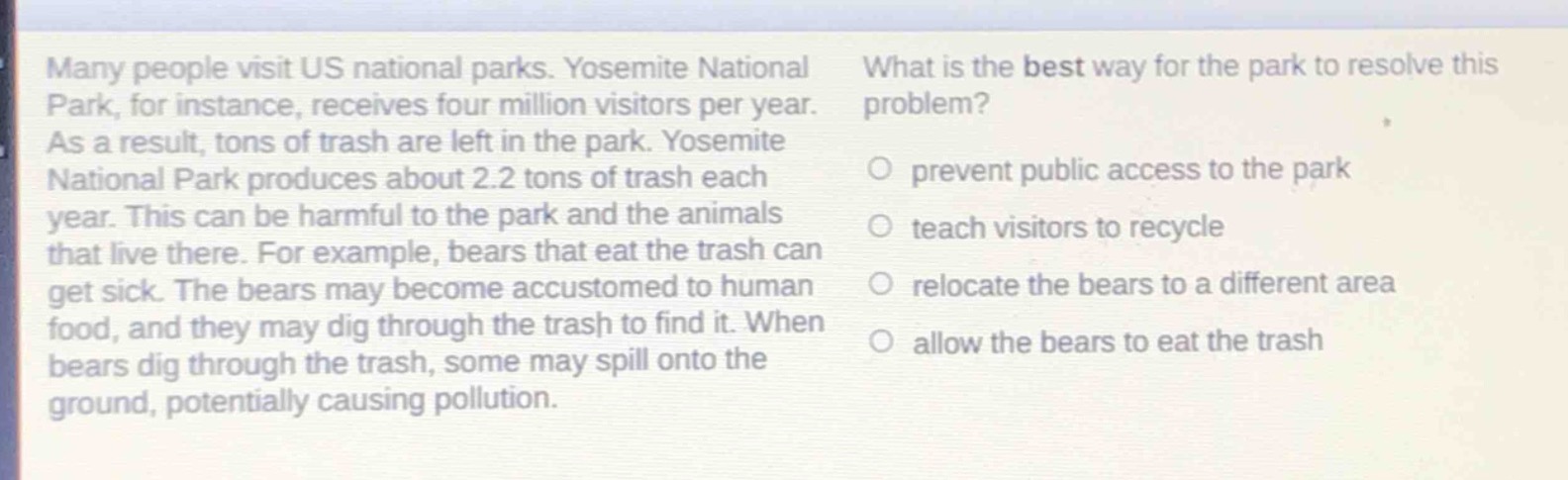
many people visit us national parks. yosemite national park, for instance, receives four million visitors per year. as a result, tons of trash are left in the park. yosemite national park produces about 2.2 tons of trash each year. this can be harmful to the park and the animals that live there. for example, bears that eat the trash can get sick. the bears may become accustomed to human food, and they may dig through the trash to find it. when bears dig through the trash, some may spill onto the ground, potentially causing pollution. what is the best way for the park to resolve this problem? prevent public access to the park teach visitors to recycle relocate the bears to a different area allow the bears to eat the trash
Answer
Brief Explanations:
Preventing public access is extreme and not ideal for a national - park's purpose. Relocating bears is difficult and disrupts their natural habitat. Allowing bears to eat trash is harmful to them and the environment. Teaching visitors to recycle can reduce the amount of trash in the park, which helps protect the park and its animals.
Answer:
teach visitors to recycle