match each scenario with the correct component of natural selection. on average, sea turtles lay about 110…
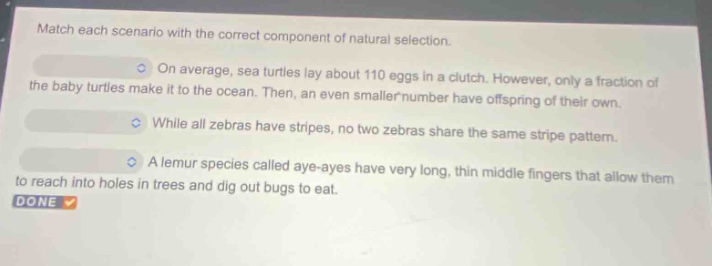
match each scenario with the correct component of natural selection. on average, sea turtles lay about 110 eggs in a clutch. however, only a fraction of the baby turtles make it to the ocean. then, an even smaller number have offspring of their own. while all zebras have stripes, no two zebras share the same stripe pattern. a lemur species called aye - ayes have very long, thin middle fingers that allow them to reach into holes in trees and dig out bugs to eat.
Answer
Brief Explanations:
- For the sea - turtle scenario, overproduction occurs when sea turtles lay many eggs but only a fraction survive to reproduce, which is a key component of natural selection.
- The zebra stripe - pattern scenario represents variation. The fact that no two zebras have the same stripe pattern shows genetic variation within the species.
- The aye - aye finger scenario is an example of adaptation. The long, thin middle fingers are an adaptation that helps the aye - aye to access its food source.
Answer:
- Overproduction: On average, sea turtles lay about 110 eggs in a clutch. However, only a fraction of the baby turtles make it to the ocean. Then, an even smaller number have offspring of their own.
- Variation: While all zebras have stripes, no two zebras share the same stripe pattern.
- Adaptation: A lemur species called aye - ayes have very long, thin middle fingers that allow them to reach into holes in trees and dig out bugs to eat.