which mates are least likely to produce offspring that have the disorder?\no male 1 and female 2\no male 3…
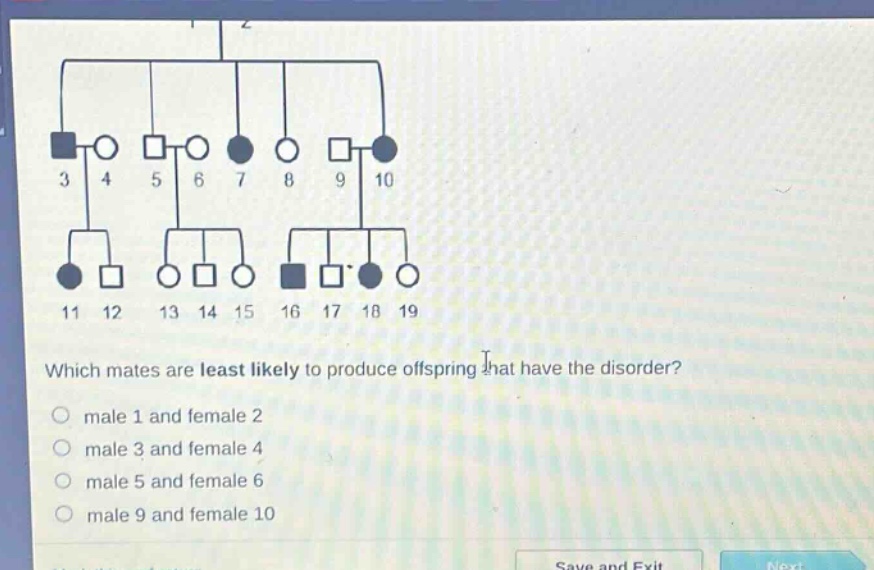
which mates are least likely to produce offspring that have the disorder?\no male 1 and female 2\no male 3 and female 4\no male 5 and female 6\no male 9 and female 10
Answer
Explanation:
Step1: Analyze the pedigree
From the pedigree, we can see that the disorder seems to be a recessive - like trait (as it skips generations in some cases). Males 3, 9, and 17 are affected (let's assume the disorder is represented by allele 'a' and the normal allele is 'A'). Females 7, 10, and 18 are affected.
Step2: Determine genotypes
Male 3 and male 9 are likely to be 'aa' (homozygous recessive as they have the disorder). Male 5 and female 6 do not have the disorder. If the disorder is recessive, and they have no affected offspring shown in their immediate - family, they are most likely homozygous dominant ('AA') or at least one of them is homozygous dominant. When two non - affected individuals (either both 'AA' or one 'AA' and one 'Aa') mate, the probability of having an affected offspring ('aa') is the lowest compared to other pairs where one or both are likely to carry the recessive allele. Male 1 and female 2 have an affected offspring (male 3), so they are carriers ('Aa'). Male 3 and female 4 have an affected offspring (female 11), so they are also likely carriers. Male 9 and female 10 are both affected ('aa'), so all their offspring will inherit at least one recessive allele.
Answer:
male 5 and female 6