a model of natural selection is shown here with a small beetle population. some green beetles in the…
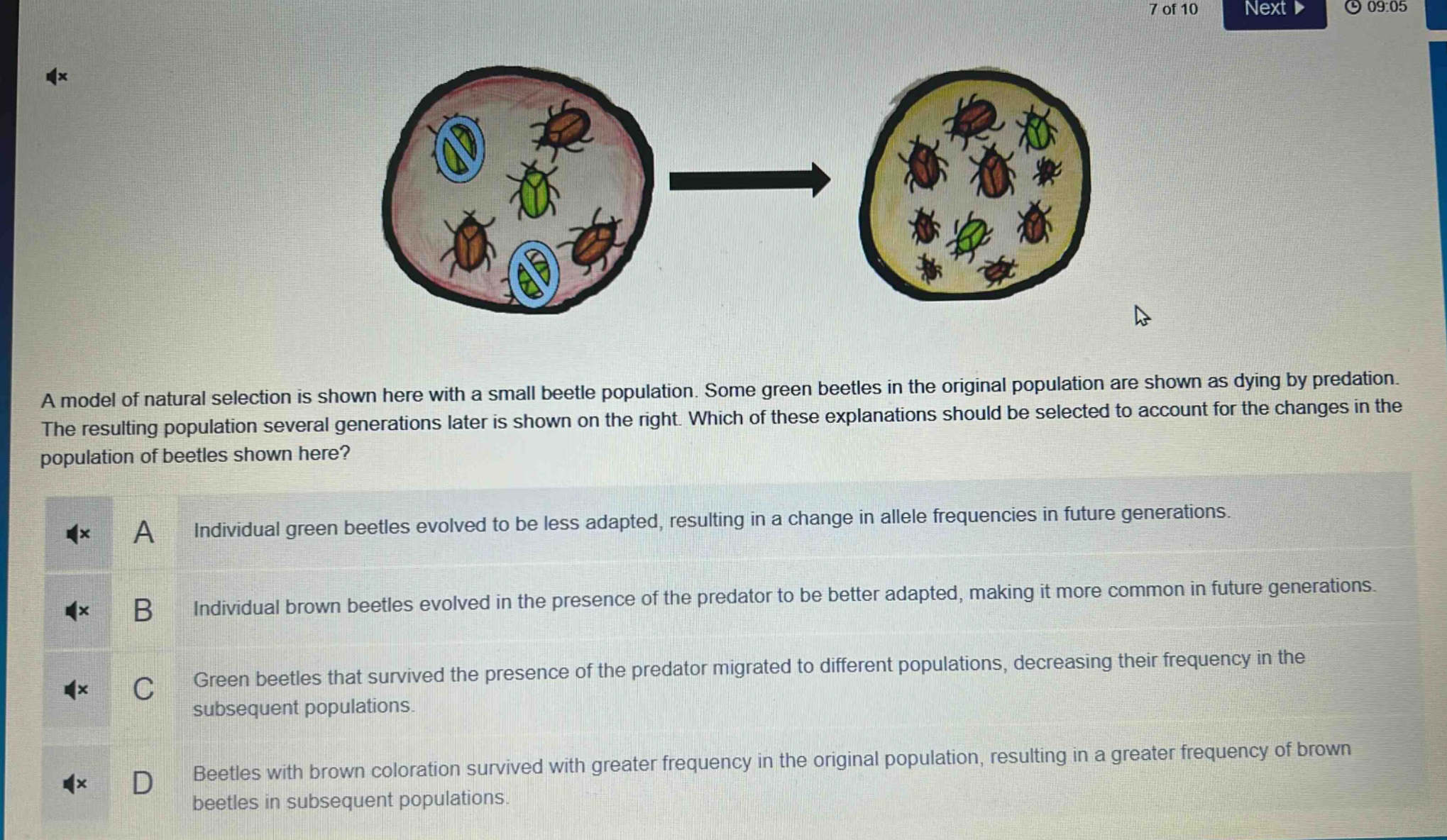
a model of natural selection is shown here with a small beetle population. some green beetles in the original population are shown as dying by predation. the resulting population several generations later is shown on the right. which of these explanations should be selected to account for the changes in the population of beetles shown here?\na individual green beetles evolved to be less adapted, resulting in a change in allele frequencies in future generations.\nb individual brown beetles evolved in the presence of the predator to be better adapted, making it more common in future generations.\nc green beetles that survived the presence of the predator migrated to different populations, decreasing their frequency in the subsequent populations.\nd beetles with brown coloration survived with greater frequency in the original population, resulting in a greater frequency of brown beetles in subsequent populations.
Answer
Brief Explanations:
Natural selection is the process by which organisms better adapted to their environment tend to survive and reproduce more than those less adapted. In this case, brown - colored beetles had a survival advantage over green - colored beetles in the presence of predators. This led to a higher frequency of brown beetles in subsequent generations as they were more likely to survive and pass on their genes. Option A is incorrect because evolution occurs in populations, not in individuals. Option B is incorrect as individuals do not evolve in the short - term in response to predators; it is the population that evolves over generations. Option C is not supported by the model as there is no indication of migration.
Answer:
D. Beetles with brown coloration survived with greater frequency in the original population, resulting in a greater frequency of brown beetles in subsequent populations.