which one of the following statements regarding the inositide signalling pathway is correct?\n\n…
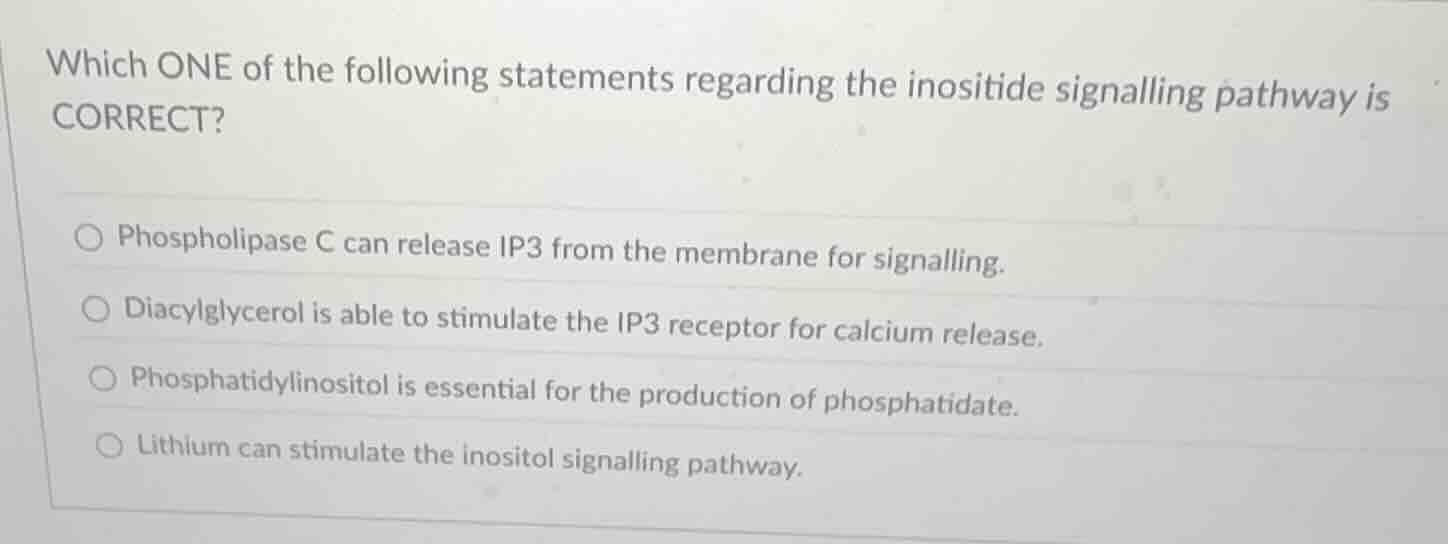
which one of the following statements regarding the inositide signalling pathway is correct?\n\n- phospholipase c can release ip3 from the membrane for signalling.\n- diacylglycerol is able to stimulate the ip3 receptor for calcium release.\n- phosphatidylinositol is essential for the production of phosphatidate.\n- lithium can stimulate the inositol signalling pathway.
Answer
Brief Explanations:
The inositide signaling pathway begins when a signaling molecule activates Phospholipase C (PLC). PLC then cleaves the membrane phospholipid phosphatidylinositol 4,5-bisphosphate ($PIP_2$) into two second messengers: Inositol 1,4,5-trisphosphate ($IP_3$) and Diacylglycerol (DAG). $IP_3$ is released into the cytosol, where it binds to $IP_3$ receptors on the endoplasmic reticulum to trigger calcium release. DAG remains in the membrane to activate Protein Kinase C. Lithium actually inhibits the pathway by blocking the recycling of inositol. Phosphatidylate is typically produced via different lipid metabolic pathways.
Answer:
Phospholipase C can release IP3 from the membrane for signalling.