parasites are organisms that live in or on a host organism, obtaining essential nutrition for themselves…
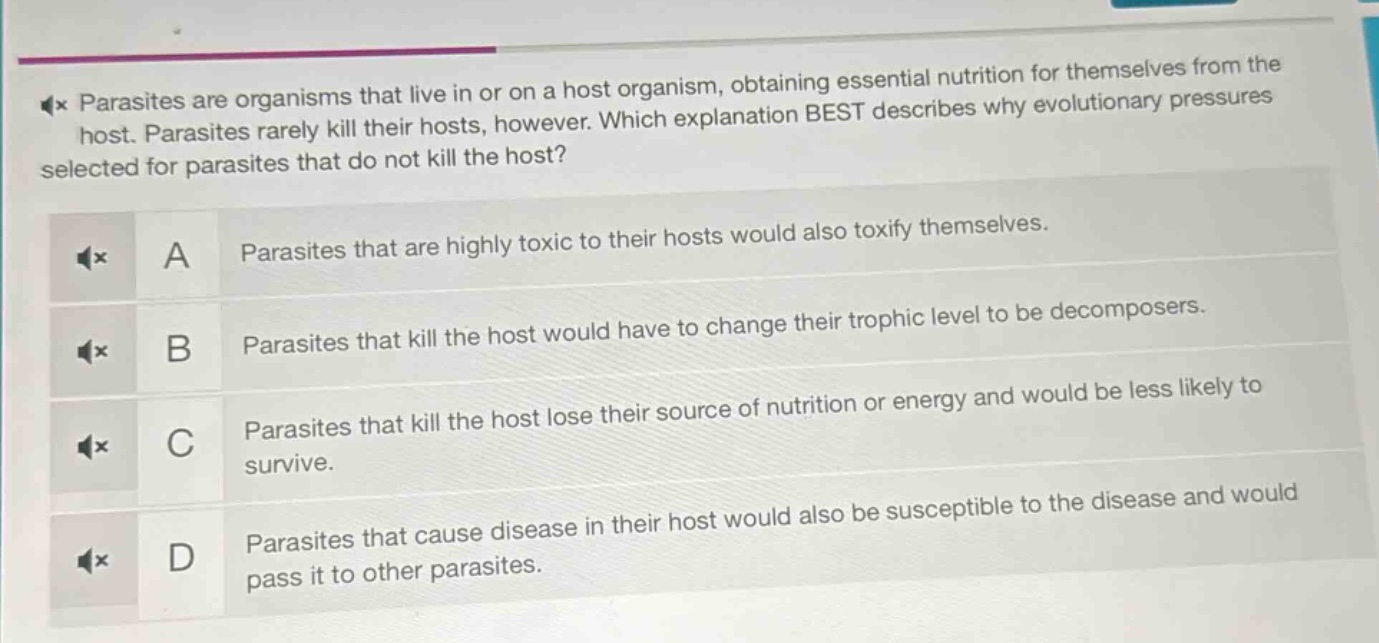
parasites are organisms that live in or on a host organism, obtaining essential nutrition for themselves from the host. parasites rarely kill their hosts, however. which explanation best describes why evolutionary pressures selected for parasites that do not kill the host?\na parasites that are highly toxic to their hosts would also toxify themselves.\nb parasites that kill the host would have to change their trophic level to be decomposers.\nc parasites that kill the host lose their source of nutrition or energy and would be less likely to survive.\nd parasites that cause disease in their host would also be susceptible to the disease and would pass it to other parasites.
Answer
Brief Explanations:
Parasites rely on hosts for nutrition. Killing the host means losing this resource, reducing their survival - chances. This is a key evolutionary pressure. Option A is not the main evolutionary reason. Option B about trophic - level change is not the core factor. Option D about disease - susceptibility among parasites is not the main reason for not killing the host.
Answer:
C. Parasites that kill the host lose their source of nutrition or energy and would be less likely to survive.