parasites and predators case study worksheet\n\nname: justin o\n\ndate:\n\nbackground\n\nforensic entomology…
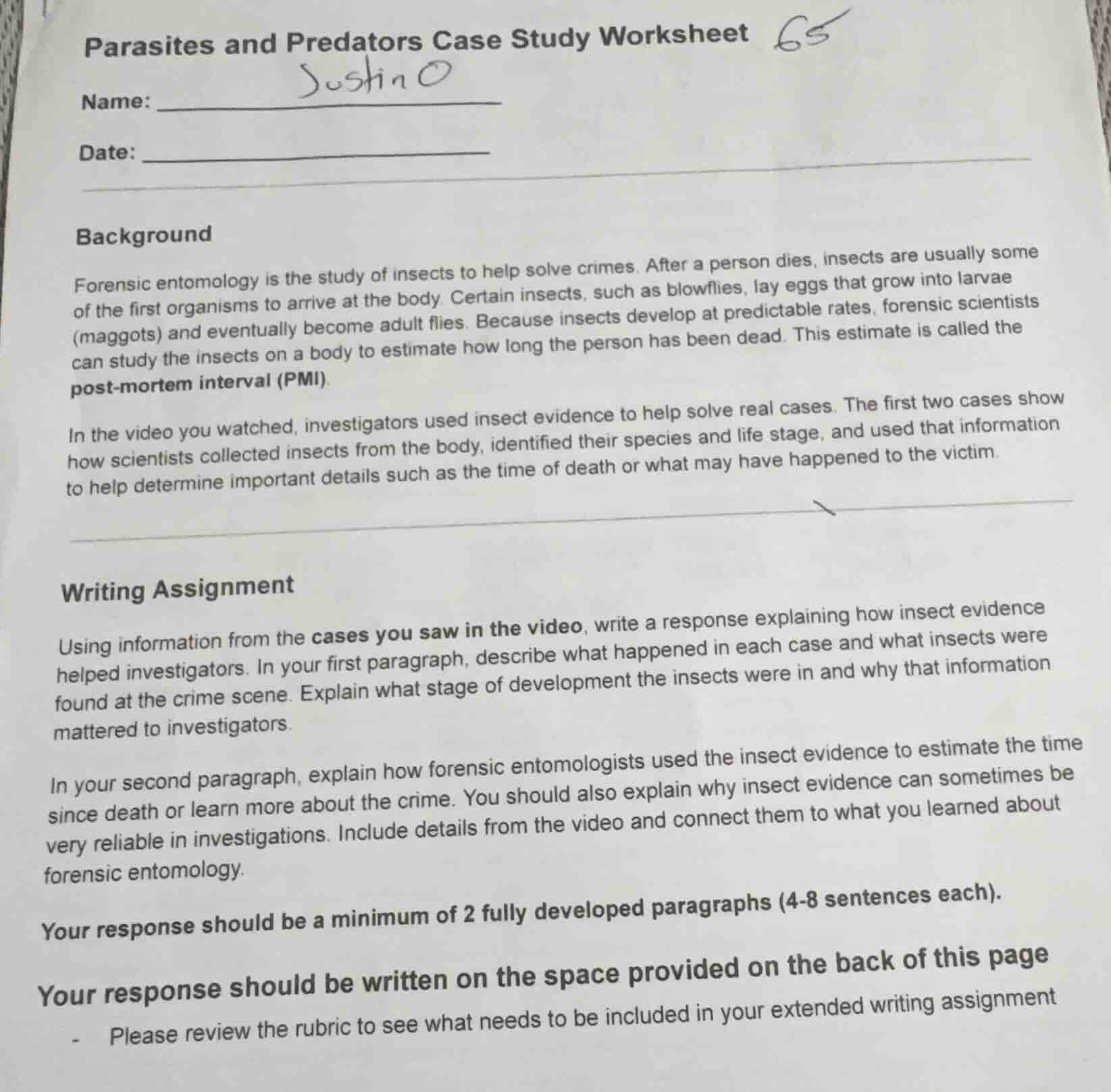
parasites and predators case study worksheet\n\nname: justin o\n\ndate:\n\nbackground\n\nforensic entomology is the study of insects to help solve crimes. after a person dies, insects are usually some of the first organisms to arrive at the body. certain insects, such as blowflies, lay eggs that grow into larvae (maggots) and eventually become adult flies. because insects develop at predictable rates, forensic scientists can study the insects on a body to estimate how long the person has been dead. this estimate is called the post-mortem interval (pmi).\n\nin the video you watched, investigators used insect evidence to help solve real cases. the first two cases show how scientists collected insects from the body, identified their species and life stage, and used that information to help determine important details such as the time of death or what may have happened to the victim.\n\nwriting assignment\n\nusing information from the cases you saw in the video, write a response explaining how insect evidence helped investigators. in your first paragraph, describe what happened in each case and what insects were found at the crime scene. explain what stage of development the insects were in and why that information mattered to investigators.\n\nin your second paragraph, explain how forensic entomologists used the insect evidence to estimate the time since death or learn more about the crime. you should also explain why insect evidence can sometimes be very reliable in investigations. include details from the video and connect them to what you learned about forensic entomology.\n\nyour response should be a minimum of 2 fully developed paragraphs (4-8 sentences each).\n\nyour response should be written on the space provided on the back of this page\n\n- please review the rubric to see what needs to be included in your extended writing assignment
Answer
Brief Explanations:
Forensic entomology utilizes the predictable life cycles of necrophagous insects, primarily blowflies, to determine the post-mortem interval (PMI). In typical criminal cases, investigators collect larvae (maggots) and pupae from the body. By identifying the species and measuring the current stage of development—such as the length of the larvae or the presence of empty pupal cases—scientists can calculate exactly when the eggs were laid based on local temperature data. This information is vital because it provides a biological clock that establishes a minimum time since death, often confirming or refuting a suspect's alibi.
Insect evidence is considered highly reliable because insects are often the first to arrive at a crime scene, sometimes within minutes of death. Their development is strictly governed by environmental factors like temperature, which allows for precise mathematical modeling of their growth. Beyond estimating the PMI, the presence of specific insects can indicate if a body was moved from one location to another or if the victim had drugs or toxins in their system, as these substances are preserved in the insects' tissues. This scientific consistency makes entomological data a cornerstone of forensic biology.
Answer:
In forensic investigations, insect evidence such as blowfly larvae and pupae are collected to determine the stage of development. By analyzing these stages, investigators can calculate the post-mortem interval (PMI), which reveals how long a body has been deceased. This information is crucial for establishing timelines and verifying witness statements.
Forensic entomologists use the known growth rates of insects, influenced by ambient temperature, to provide a reliable estimate of the time since death. This evidence is dependable because insects follow a predictable biological schedule and are often the first "witnesses" to a crime. Additionally, insect activity can reveal if a body was relocated or if specific chemicals were present at the time of death.