phantom pain can occur even when atypical signals from the peripheral nervous system are blocked. so, many…
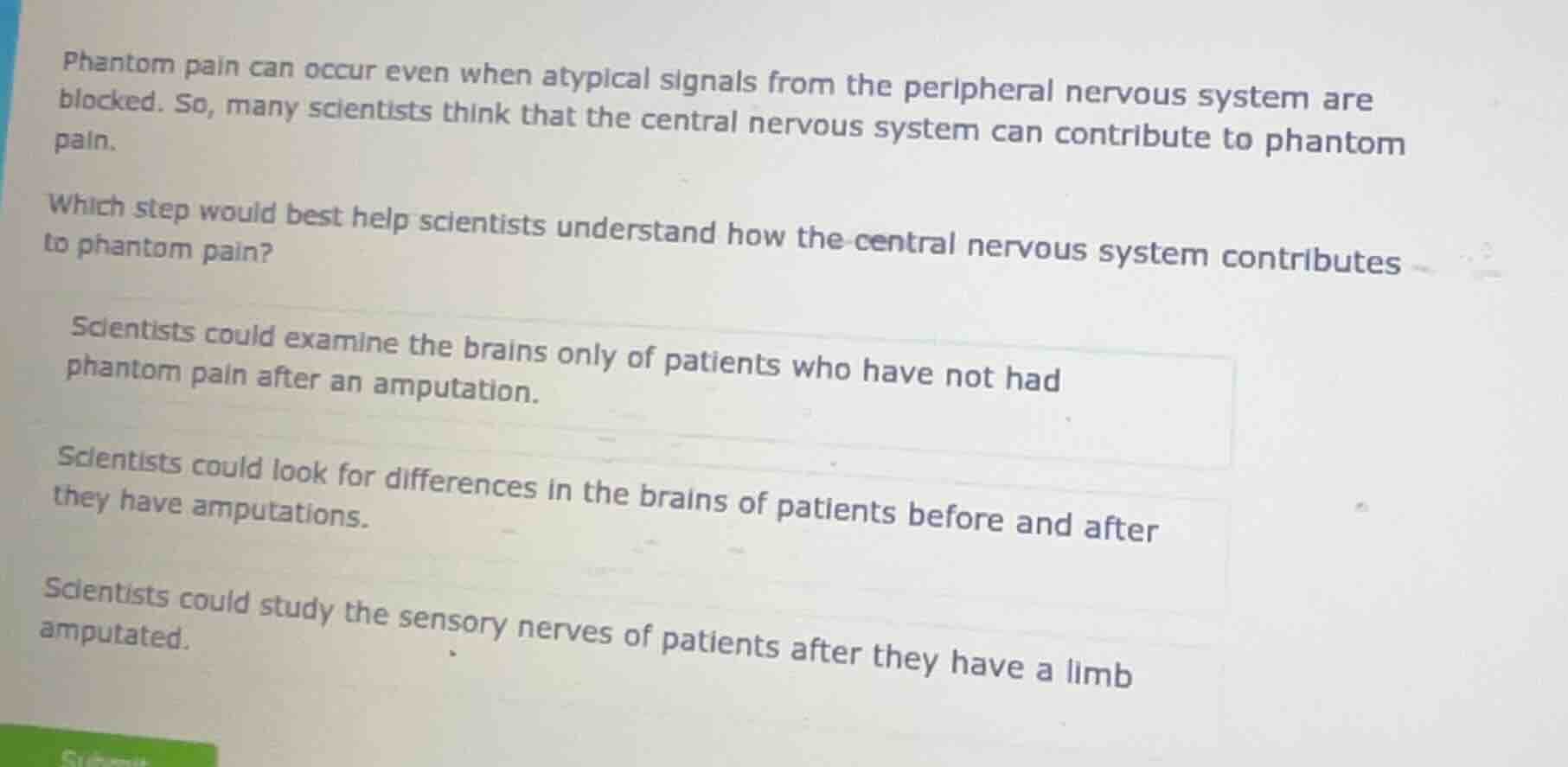
phantom pain can occur even when atypical signals from the peripheral nervous system are blocked. so, many scientists think that the central nervous system can contribute to phantom pain.\nwhich step would best help scientists understand how the central nervous system contributes to phantom pain?\nscientists could examine the brains only of patients who have not had phantom pain after an amputation.\nscientists could look for differences in the brains of patients before and after they have amputations.\nscientists could study the sensory nerves of patients after they have a limb amputated.
Answer
Brief Explanations:
To understand how the central nervous system contributes to phantom pain, scientists need to observe changes linked to the condition. Studying only patients without phantom pain provides no comparison to those with it. Examining sensory nerves focuses on the peripheral nervous system, not the central one. Comparing brain differences before and after amputation lets researchers identify central nervous system changes that correlate with the onset of phantom pain.
Answer:
Scientists could look for differences in the brains of patients before and after they have amputations.