the phoenix area of the southwestern desert typically receives 8 inches of precipitation yearly, in two…
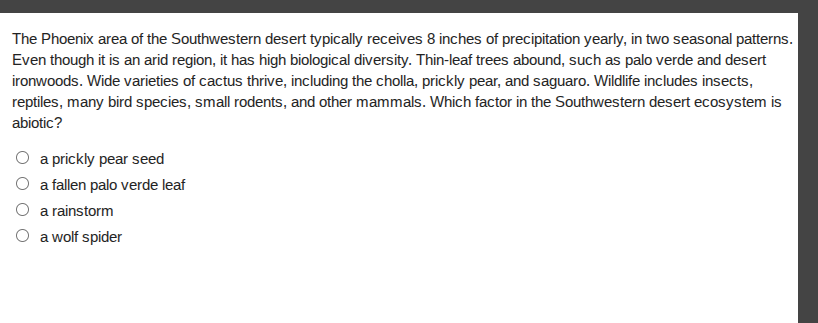
the phoenix area of the southwestern desert typically receives 8 inches of precipitation yearly, in two seasonal patterns. even though it is an arid region, it has high biological diversity. thin-leaf trees abound, such as palo verde and desert ironwoods. wide varieties of cactus thrive, including the cholla, prickly pear, and saguaro. wildlife includes insects, reptiles, many bird species, small rodents, and other mammals. which factor in the southwestern desert ecosystem is abiotic?\n○ a prickly pear seed\n○ a fallen palo verde leaf\n○ a rainstorm\n○ a wolf spider
Answer
Answer:
a rainstorm
Brief Explanations:
Abiotic factors are non-living components of an ecosystem. A rainstorm is a non-living environmental event, while a prickly pear seed, fallen palo verde leaf, and wolf spider are all living (or once-living, organic) components of the ecosystem, making them biotic factors.