the picture shows the skull of an extinct aquatic animal and the skull of a present - day gray whale…
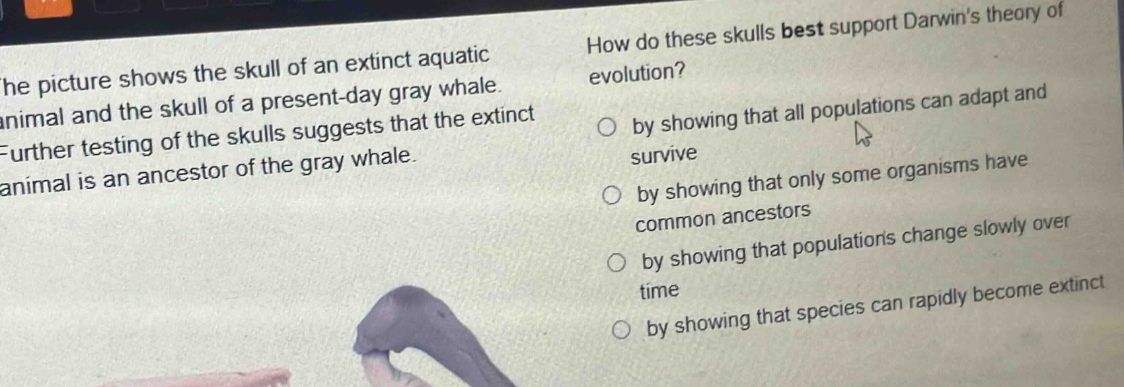
the picture shows the skull of an extinct aquatic animal and the skull of a present - day gray whale. further testing of the skulls suggests that the extinct animal is an ancestor of the gray whale. how do these skulls best support darwins theory of evolution? by showing that all populations can adapt and survive by showing that only some organisms have common ancestors by showing that populations change slowly over time by showing that species can rapidly become extinct
Answer
Brief Explanations:
Darwin's theory of evolution emphasizes that populations change over time through natural - selection. The presence of an extinct animal's skull and a present - day gray whale skull, with the extinct animal being an ancestor of the gray whale, shows the slow change of populations over time.
Answer:
by showing that populations change slowly over time